



Written by Positive Phil for EcoBusinessNews.com
Walking the halls of RE+ 2025 and Yotta 2025 in Las Vegas, it became clear that the energy conversation has outgrown the small-scale mindset. The chatter wasn’t about rooftop panels or community solar — as important as those remain for households and neighborhoods. The focus was squarely on gigawatts of reliable, resilient power, designed for industries that never sleep: AI data centers, advanced manufacturing, heavy industry, mining, and greenfield industrial campuses.
For the first time, the energy industry feels less like an adjunct to the tech world and more like its foundation. AI developers, hyperscalers, and industrial operators are not just customers anymore; they are shaping the way energy infrastructure is financed, built, and operated.
🌍 Why Scale Matters
The modern economy is powered by massive, always-on energy loads.
- AI training and inference clusters demand predictable, uninterrupted power.
- Blockchain and cloud computing are rewriting demand curves.
- Advanced manufacturing and mining cannot afford downtime or volatility.
For these sectors, kilowatts are no longer enough — they need gigawatts. And they need it delivered in ways the traditional grid was never designed to handle.
This is why the conversation is shifting from retrofitting what exists to building entirely new greenfield energy campuses. These projects are purpose-built ecosystems, integrating generation, storage, and microgrids from the ground up to serve industries that require 24/7 resilience.
🔋 Storage at the Center
If there was one phrase that echoed through the conference halls, it was this: storage-first.
Battery Energy Storage Systems (BESS) have gone from supporting role to leading star. No longer considered “optional add-ons,” they are now the backbone of modern infrastructure.
BESS is enabling:
- Firm delivery of renewable energy even when the sun isn’t shining or the wind isn’t blowing.
- Peak demand management, reducing the impact of volatility in deregulated markets.
- Stability for mission-critical operations that cannot afford interruptions.
Developers, financiers, and operators alike are now sizing and financing projects based on storage capacity as much as generation capacity. This shift reflects a new era where batteries equal resilience — and resilience equals competitiveness.
⚙️ Co-Generation’s Resurgence
While solar and wind dominate headlines, co-generation is stepping back into the spotlight.
High-efficiency natural gas turbines — particularly when paired with heat recovery systems — are proving indispensable for baseload reliability. Combined with BESS and renewables, co-gen is creating hybrid systems that can deliver power around the clock while bypassing multi-year interconnection delays.
In deregulated markets like Texas, hybrid co-gen plus storage models are especially attractive. Operators can shield themselves from spot market volatility while maintaining control over cost and certainty of supply.
For industries where downtime costs millions — such as AI campuses, industrial manufacturing, and mining operations — this hybrid approach is becoming the new normal.
🏗️ The Rise of Greenfield Energy Campuses
Both RE+ and Yotta spotlighted a phrase that’s quickly becoming industry standard: “greenfield”.
Rather than piecing together incremental upgrades, developers are pursuing purpose-built energy campuses designed to serve:
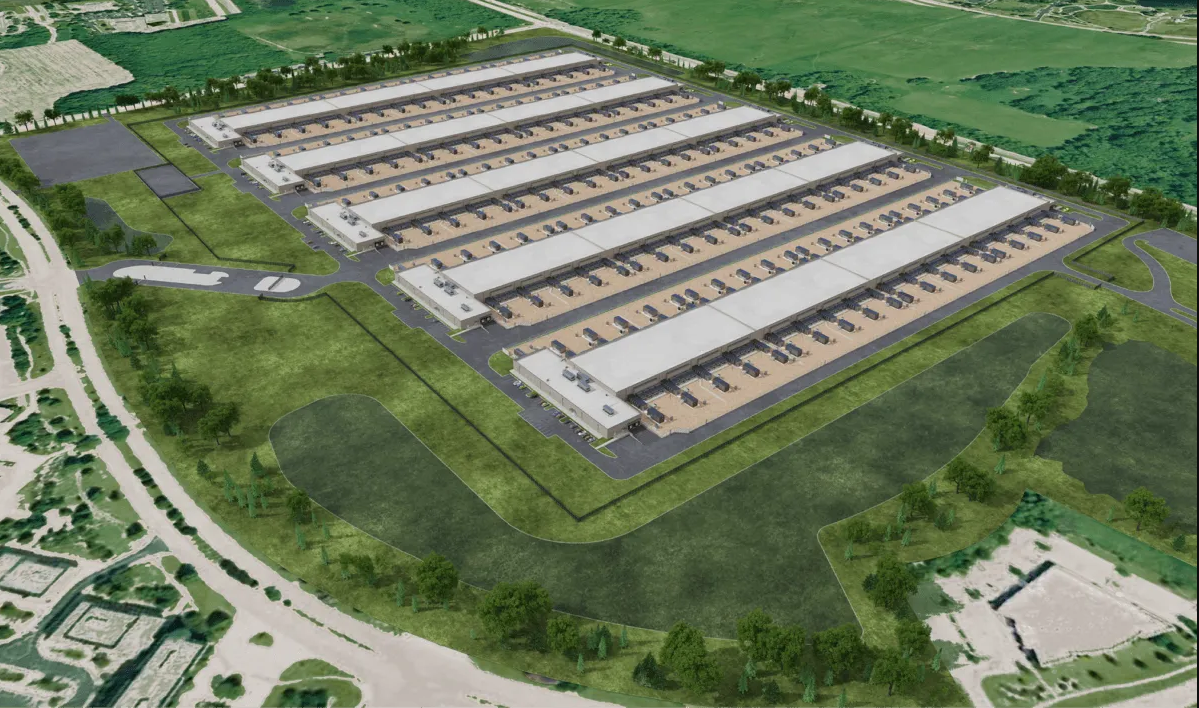
- Clusters of hyperscale data centers
- Mining and refining operations
- Industrial manufacturing zones
These new campuses typically combine:
- Utility-scale solar and wind generation
- Massive BESS installations for peak shaving and resiliency
- Co-generation or hybrid natural gas for firm baseload power
- Microgrid architecture for islanded independence from fragile regional grids
It’s an integrated, holistic design philosophy that treats energy infrastructure not as a commodity but as a strategic enabler of growth.
💰 Capital Is Following the Trend
Another message that came through loud and clear: the money is moving.
Private equity firms, infrastructure funds, sovereign wealth investors, and even tech giants are now pouring billions into large-scale, hybrid, and greenfield projects. The conversations at RE+ and Yotta weren’t about pilot projects — they were about multi-gigawatt investments designed to power industries for decades.
Research presented by leading consultancies points to trillions of dollars in capital deployment this decade at the intersection of AI and energy. In short: the convergence of digital infrastructure and power infrastructure is not a side bet — it’s one of the defining investment themes of our time.
✨ Why It Matters
The energy transition has reached an inflection point. Residential solar and distributed generation remain vital, but the center of gravity is shifting to large-scale, hybrid systems built for industries that are shaping the future.
As I left Las Vegas, one truth stood out above all: energy and AI are now the same story. Without gigawatt-scale solutions that combine renewables, storage, and co-generation, the digital economy cannot move forward.
And yet, what struck me most was the optimism. Even in the face of policy uncertainty, supply chain constraints, and global competition, the innovators in this space are not just building infrastructure — they are reshaping the future of competitiveness, sustainability, and security.
That’s what makes this industry resilient. That’s what makes it exciting. And that’s why I’ll keep covering it here at EcoBusinessNews.com.
— Written by Positive Phil