





The U.S. power sector is grappling with an unprecedented surge in electricity demand—driven by data centers, AI computing, electrification, and industrial growth—while new generation capacity struggles to keep pace. Developers continue to propose thousands of projects, yet a staggering number are abandoned before construction. In 2025, nearly 2,000 power initiatives were canceled, wiping out over 260 GW of planned capacity, with clean energy bearing the brunt: utility-scale solar around 86 GW, battery storage 79 GW, and wind 54 GW. Late-2025 federal actions further paused major offshore wind developments like Vineyard Wind 1, Revolution Wind, Sunrise Wind, Empire Wind 1, and Coastal Virginia Offshore Wind, citing national security concerns and removing tens of gigawatts from the East Coast pipeline.
These cancellations highlight critical patterns in scale, technology, geography, and root causes. Understanding them is essential for accurate grid planning, investment strategies, and maintaining reliability as loads accelerate.
Overstated supply expectations from announced (but unrealized) projects lead to underbuilt transmission, delayed interconnections, and greater vulnerability to shortages—particularly in data-center-heavy regions.
What Constitutes a Canceled Project? A canceled generation project is any proposed facility formally withdrawn or abandoned before commercial operation. This occurs across stages: after announcements, during permitting/siting, or in interconnection queues. Attrition is inherent in the multi-year development process—developers adapt to shifting costs, regulations, markets, or grid realities. However, widespread dropouts distort long-term forecasts that rely on queue data or proposals, inflating perceived supply and complicating regional reliability assessments in high-growth areas.
Primary Drivers of Cancellations Few cancellations trace to one issue; most result from compounded pressures, amplified by recent policy shifts and economic conditions.
- Interconnection Bottlenecks (Detailed): Queue backlogs remain the dominant barrier. Nationwide, queues exceed 2,000–2,300 GW (far surpassing installed capacity), with waits averaging 3–5+ years in key regions like PJM (8+ years historically, now reforming) and MISO. Attrition rates often hit 40–80% (e.g., 46–79% post-agreement in PJM, NYISO, SPP). Costs for studies and network upgrades have soared—averaging $240/kW for completed projects but $599/kW for withdrawn ones—due to clustered reforms, deposit requirements, and substation/node saturation. In PJM’s Transition Cycle 1, massive studies filtered non-viable entries, yet delays persist. Renewables suffer most, as variable output requires precise, costly integration, stalling clean additions and elevating prices amid demand spikes.
- Transmission Constraints: Lagging infrastructure expansion limits efficient power delivery, imposing prohibitive upgrades or rendering sites unfeasible.
- Financing & Economic Pressures: Higher interest rates, capital costs, and revenue volatility (e.g., storage price dips from oversupply) strain long-lead projects.
- Market & Policy Volatility: Fuel/power price fluctuations, incentive changes, and federal reforms add uncertainty.
- Permitting & Siting Hurdles: Extended reviews, zoning fights, and community opposition delay or derail efforts, despite local needs for reliable, affordable power.
Technology-Specific Trends Cancellations vary by sector due to differing timelines, costs, and market dynamics.
Solar & Wind: Dominant Losses These renewables comprise 90%+ of 2025 cancellations, reflecting their pipeline dominance and early-queue vulnerability to delays/costs. Lost capacity slows decarbonization, strains existing assets, and risks higher prices/reliability issues.
Battery Storage: Sector Maturation Storage faces recalibration but remains vital for renewable integration and grid flexibility. Pullbacks emphasize diversified funding, stable PPAs, and resilience over subsidy dependence. Demand stays strong; successful developers capture premium value in balancing variable sources.
Nuclear & Natural Gas: Infrequent but Impactful Larger-scale projects see fewer cancellations, but losses hit firm/dispatchable capacity hard. Nuclear deters via high costs/timelines; gas encounters permitting and policy variability.
Regional Hotspots Cancellations concentrate in Midwest/South (solar/storage), PJM/MISO queues, and federal-land areas (e.g., Southwest/Nevada large solar denials). Offshore East Coast pauses added acute pressure.
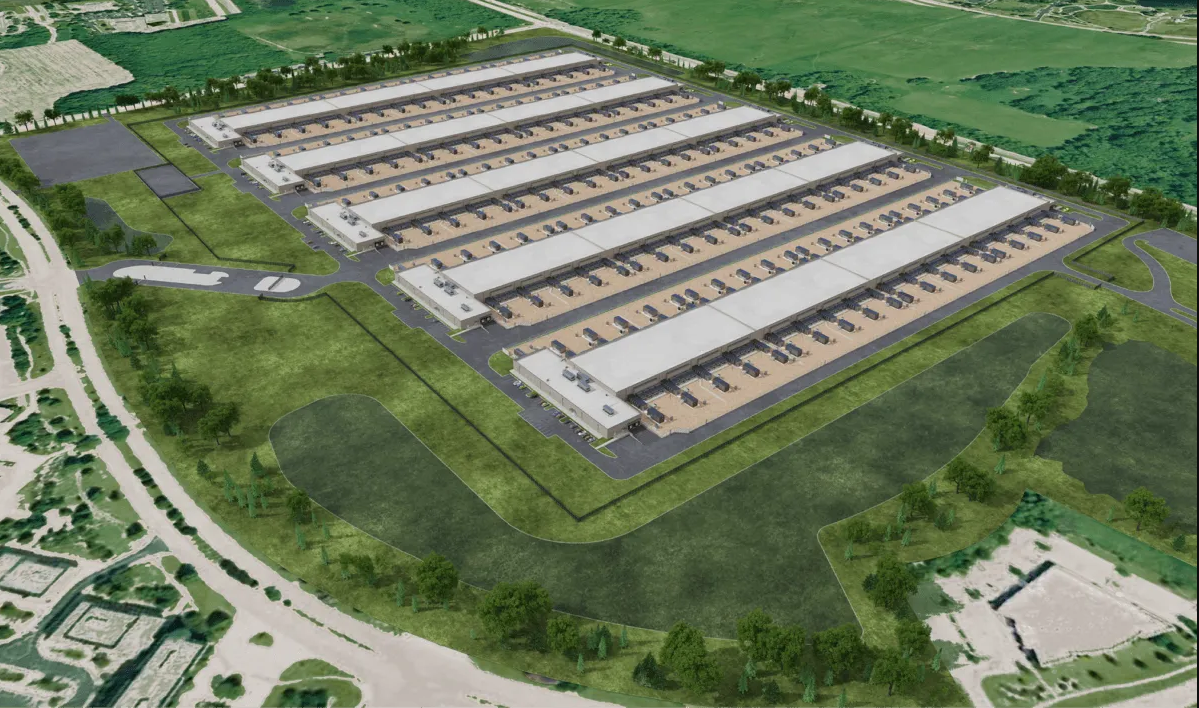
The Data Center Demand Surge Data centers consumed ~4% of U.S. electricity in 2024–2025, with hyperscale sites requiring 100–500 MW each. Forecasts show grid power demand rising 22% in 2025 (to ~62 GW utility-supplied), potentially tripling or more by 2030 (up to 134 GW or higher, 7–12% of total U.S. consumption). Growth clusters in Virginia, Texas, Midwest, driving regional load forecasts skyward and exposing supply gaps from cancellations—e.g., stalled billion-dollar facilities over power uncertainty.
Solutions for Data Center Power Amid Constraints Operators increasingly adopt strategies to secure reliable supply:
- Co-location & Behind-the-Meter Generation: Direct pairing with on-site solar, wind, gas, or nuclear to bypass queues.
- Long-Term PPAs & Virtual Agreements: Securing renewables/storage for 24/7 carbon-free goals.
- Microgrids & Hybrid Systems: Self-reliant setups with batteries/backups for resilience.
- Strategic Site Selection: Prioritizing zones with available transfer capacity (ATC), lower upgrade risks, and supportive infrastructure using grid analytics.
These approaches mitigate bottlenecks, enhance efficiency, and align with AI-driven expansion.
Concise Summary & Forward Path In 2025, ~260 GW of planned capacity—mostly renewables—was lost to cancellations, driven by interconnection delays (3–5+ years, $100M+ upgrades), transmission gaps, and policy/economic shifts. This widens demand-supply imbalances as data centers push consumption toward doubling or tripling by 2030, threatening reliability and affordability. Yet opportunities emerge: targeted siting in grid-strong areas, innovative financing, queue reforms, and data-center solutions like co-location/PPAs can accelerate viable builds. Prioritizing low-risk, high-feasibility locations supports resilient, sustainable growth.
EcoBusinessNews provides tools for identifying optimal sites, evaluating grid metrics (ATC/AOC), tracking load trends, and minimizing development risks. Book a demo to explore tailored strategies.
- Power Infrastructure
- Renewable Energy Developers
- Energy Markets
Recent Posts
- AI-Enhanced Grid Planning Tools
- Evolving U.S. Electricity Generation Landscape
- Power Strategies for Data Center Expansion