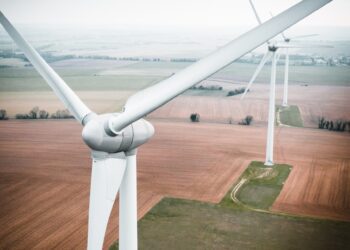
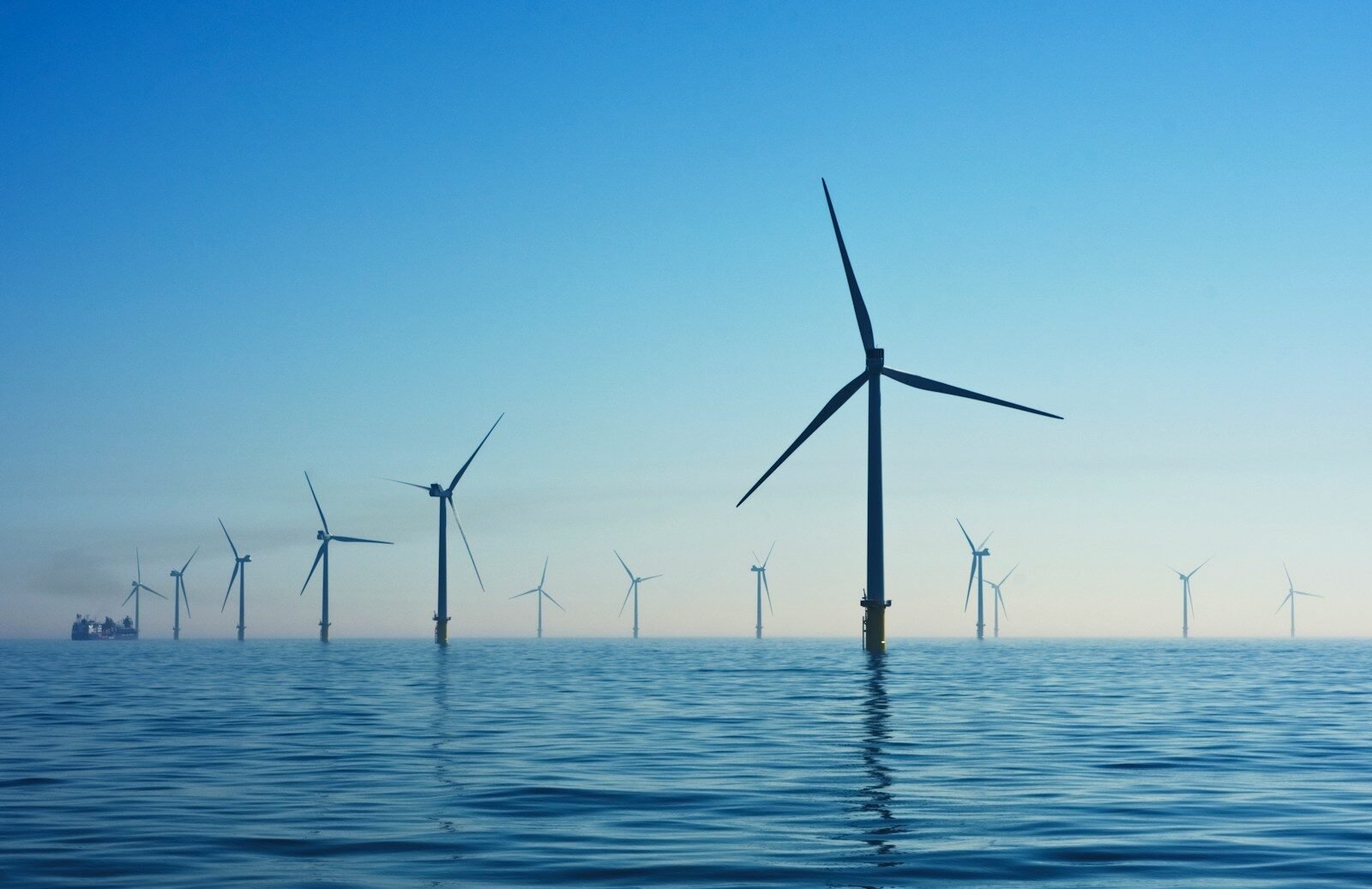

Offshore wind is electricity made by large turbines placed in the ocean, where winds are stronger and steadier than on land. It is one of the fastest growing ways to produce clean power near big coastal cities.

How offshore wind works
Wind turns the blades, the blades spin a generator, and cables carry the power to shore. Turbines sit on foundations fixed to the seabed, or on floating platforms in deeper water. A substation at sea gathers the power from many turbines before it travels to land.
Why companies and cities want it
Strong ocean winds mean each turbine can produce a lot of power. The projects also sit close to large population centers, which cuts the need for long transmission lines. For businesses with high power needs, that matters.
The challenges
Offshore projects are costly and complex. They need special ships, ports, permits and years of planning. Supply chains for turbines and cables can be tight, and costs have swung with interest rates and materials prices. Local concerns about fishing and views also play a part.
What to watch
Watch for floating wind, which opens deeper water, and for new port and vessel capacity. The U.S. Department of Energy publishes updates on projects and strategy.
The takeaway for business
Offshore wind will not fit every region, but where it does, it can supply large amounts of clean power. For related reading, see our guide to the grid and power topic.
Get the Eco Business News newsletter. Free.
Plain news on eco, business and data centers. No spam.