
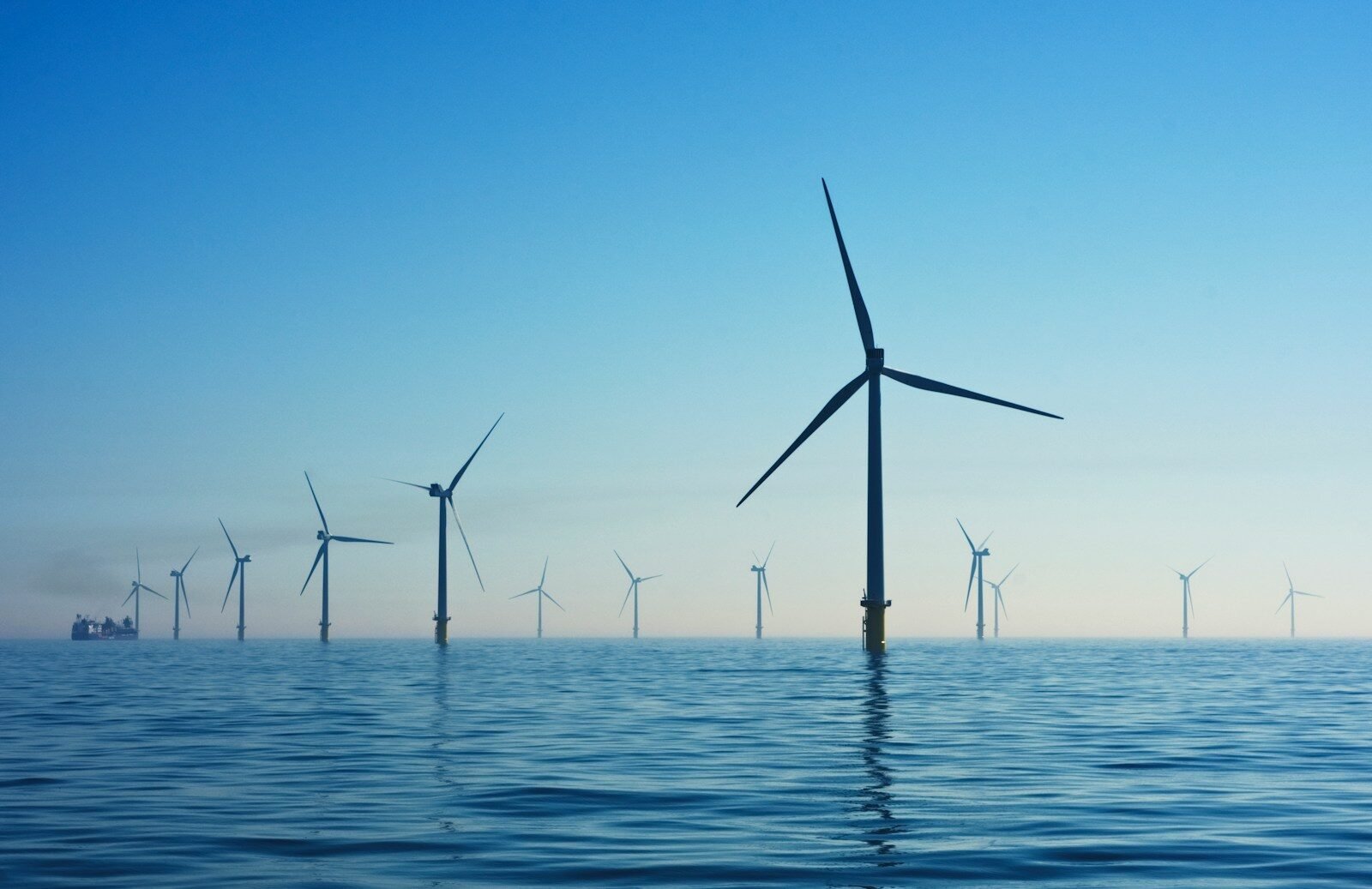
Offshore wind is electricity made by large turbines placed in the ocean, where winds are stronger and steadier than on land. It is one of the fastest growing ways to produce clean power near big coastal cities.

How offshore wind works
Wind turns the blades, the blades spin a generator, and cables carry the power to shore. Turbines sit on foundations fixed to the seabed, or on floating platforms in deeper water. A substation at sea gathers the power from many turbines before it travels to land.
Why companies and cities want it
Strong ocean winds mean each turbine can produce a lot of power. The projects also sit close to large population centers, which cuts the need for long transmission lines. For businesses with high power needs, that matters.
The challenges
Offshore projects are costly and complex. They need special ships, ports, permits and years of planning. Supply chains for turbines and cables can be tight, and costs have swung with interest rates and materials prices. Local concerns about fishing and views also play a part.
What to watch
Watch for floating wind, which opens deeper water, and for new port and vessel capacity. The U.S. Department of Energy publishes updates on projects and strategy.
The takeaway for business
Offshore wind will not fit every region, but where it does, it can supply large amounts of clean power. For related reading, see our guide to the grid and power topic.
Get the Eco Business News newsletter. Free.
Plain news on eco, business and data centers. No spam.
How offshore wind works
Offshore wind turbines stand in the sea and turn wind into electricity. Winds over the ocean are often stronger and steadier than on land, so each turbine can produce more power. Cables carry the electricity to a substation at sea or on shore, and from there it enters the grid.
Modern turbines are very large, with blades that can be longer than a football field. Bigger turbines capture more wind and cut the cost per unit of power.
Fixed and floating foundations
In shallow water, turbines sit on fixed foundations. Monopiles, which are large steel tubes driven into the seabed, are the most common. Jacket foundations, built as steel lattice frames, suit deeper water.
In deeper water, floating platforms hold turbines in place with anchors and mooring lines. Floating designs open up areas with strong winds that would otherwise be too deep to use, such as off some coasts with steep seabeds.
Building a project
A project involves many steps. Developers survey the seabed, study wildlife and shipping routes, and win permits and leases. They sign agreements to sell the power, order turbines and cables, and build ports and vessels to handle the work. Installation ships place foundations, towers, and blades. Cable crews connect the farm to the grid. After testing, the farm begins to operate.
Projects take many years from planning to power, and each step can face delays from weather, supply chains, or permits.
Benefits
Offshore wind produces large amounts of clean power close to coastal cities where demand is high. It can reduce reliance on fossil fuels and bring jobs to ports and manufacturing. Output often peaks in cold months and at night in some regions, which can complement solar.
Challenges
Costs are high, and projects depend on financing, supply of vessels, and interest rates. Marine work is difficult and risky. Developers must protect fish, birds, and marine mammals, and they must work with fishing and shipping communities. Grid connections and transmission upgrades are also needed.
Policy changes can affect project plans, so developers and investors watch rules and incentives closely.
An illustrative example
Here is an illustrative example, not a real project. A developer plans a wind farm off a coastal state. It studies the seabed, consults fishing groups, and wins a lease and a contract with the local utility. It builds a port facility to assemble parts, installs foundations and turbines over two seasons, and connects the farm to the grid. Power flows to homes and businesses on the coast.
Why it matters to business
Businesses buy clean power through contracts and credits, and offshore wind can supply some of it. Port communities and manufacturers can benefit from the supply chain. Data centers and industrial users in coastal regions look to offshore wind as a source of large, steady clean energy.
What to remember
Offshore wind is a growing way to make clean power at scale. Its success depends on cost control, careful planning, and strong relations with local communities and the environment. Watch for progress in floating designs, larger turbines, and grid upgrades.
Grid connection and cables
Power from an offshore farm travels through array cables that link the turbines, then through export cables to the shore. Over long distances, high voltage direct current lines can lose less energy than alternating current. Landing the cables and connecting them to the grid often needs new substations and upgrades to nearby lines.
Cable work is a major risk in project schedules. Cables must be buried or protected on the seabed, and repairs at sea are costly and slow. Good surveys and strong protection reduce the chance of faults.
Operations and maintenance
Once a farm is running, crews reach turbines by boat or helicopter, and some farms use operations vessels that serve as a base at sea. Sensors track vibration, temperature, and blade condition, helping teams plan repairs before parts fail. Weather decides when crews can work, so planning and spare parts matter.
Local communities and the sea
Coastal communities want to know how a farm will affect fishing, tourism, and views. Developers hold public meetings, study wildlife, and design projects to reduce harm. Measures can include timing construction to avoid sensitive seasons, using quieter installation methods, and working with fishing groups on routes and compensation.
Some projects also fund local ports, training programs, and research, which build support and bring lasting benefits.
The supply chain
Offshore wind needs large ports, specialized ships, and factories for blades, towers, foundations, and cables. Building this capacity takes years and large investment. Regions that develop the supply chain early can capture jobs, while shortages of vessels or parts can delay projects everywhere.
Costs and risks
Costs depend on turbine size, water depth, distance to shore, and financing. Rising material prices and interest rates can change the picture quickly. Developers manage risk with long term power contracts, careful budgets, and strong partners.
Final thought
Offshore wind will not solve every energy problem, but it can supply large amounts of clean power near big cities. Progress depends on patient planning, honest community talks, and steady investment in ports, ships, and grid links. Readers who follow a local project can look for lease awards, permit milestones, and power contract news to see how it is moving forward.
For businesses, the practical step is to watch regional auctions and utility plans, since these decide where new clean supply will appear and which buyers can sign long term contracts for it.