



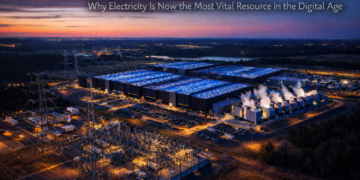
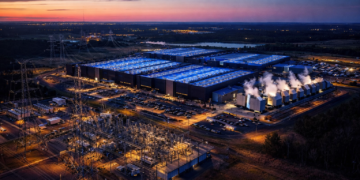
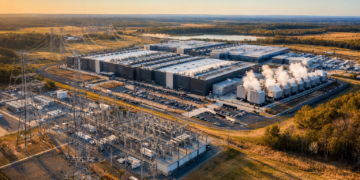


When everyone talks about AI changing the world, they sometimes forget the unglamorous part: someone has to keep the servers powered and the lights on.
NeoVolta Inc. (NASDAQ: NEOV), a U.S.-based energy storage technology company, just made a move aimed squarely at that reality. The company has secured $13 million in private placement financing, led by Infinite Grid Capital (IGC), to accelerate a 2 GWh battery energy storage manufacturing initiative in Georgia.
If the plan comes together, this won’t just be a win for one company’s growth story. It’s a snapshot of where clean energy, industrial policy, and digital infrastructure are colliding.
From Home Batteries to Grid Hardware
NeoVolta built its reputation on residential and small-commercial energy storage systems—the kind of batteries that keep homes and businesses running during outages and help make rooftop solar more useful.
This new financing is designed to push the company up the value chain:
- $13M total raise, with $10M anchored by Infinite Grid Capital
- Capital earmarked to jump-start a U.S.-based manufacturing platform
- Focus shifting toward utility-scale and commercial & industrial (C&I) battery energy storage systems (BESS)
In short: NeoVolta wants to evolve from a niche product supplier into a domestic manufacturing player capable of serving grid-scale and mission-critical projects.
The 2 GWh Georgia Play
At the center of the plan is a memorandum of understanding (MOU) to develop a state-of-the-art battery energy storage manufacturing facility in Georgia.
Key elements:
- Initial capacity: roughly 2 GWh per year
- Target markets: utility-scale projects and C&I installations
- Timeline: operations targeted to ramp in 2026, subject to definitive agreements, permits, and execution
While the MOU is non-binding, the direction is clear: NeoVolta doesn’t just want its logo on battery cabinets; it wants its name on the factory gate.
For Georgia, this kind of facility could mean:
- High-value clean energy manufacturing jobs
- A deeper regional supply chain for batteries and power electronics
- Increased relevance in the national shift toward resilient, low-carbon power infrastructure
Infinite Grid Capital: Money Plus Market Access
Infinite Grid Capital is more than a financial sponsor here. IGC is an energy infrastructure investment platform that develops and finances battery storage, hybrid energy hubs, and dedicated power solutions for data centers and AI workloads.
That matters for two reasons:
- Strategic alignment
NeoVolta wants to sell bigger systems into grid-connected and mission-critical applications. IGC already operates in that world. The fit is obvious. - Potential offtake and project funnel
NeoVolta and IGC plan to build a framework to explore future commercial opportunities, including potential offtake agreements that could link NeoVolta’s U.S.-made BESS directly into IGC’s pipeline of grid and data center projects.
If the relationship matures as planned, IGC could act as both capital partner and route-to-market, which is exactly what small and mid-cap clean tech companies usually lack.
Why This Matters for the Clean Energy Economy
This deal sits right at the intersection of three big trends:
1. U.S. industrial policy and domestic content
By siting manufacturing in Georgia and emphasizing domestic production, NeoVolta is positioning itself to benefit from federal incentives for U.S.-made battery systems, while giving utilities and businesses a supply chain story that aligns with domestic content goals and resilience priorities.
2. The storage backbone for renewables
As more renewables come online, storage is the difference between “nice to have” and “reliable grid.” A 2 GWh facility might not dominate the global market, but it’s a meaningful contribution to firming variable renewables, stabilizing regional grids, and powering microgrids and backup systems.
3. Powering AI and digital infrastructure sustainably
The AI boom is driving a surge in data center electricity demand, and that growth won’t be sustainable on fossil-heavy, unstable grids. Partners like IGC are already targeting hybrid energy hubs and dedicated power solutions for always-on workloads. If NeoVolta becomes a key supplier into those projects, it ties clean energy storage directly into one of the fastest-growing sources of demand.
Not Just Upside — Real Execution Risk
The opportunity is big, but this is not a guaranteed victory lap.
- The Georgia plan is based on a non-binding MOU. Final terms, timelines, and costs are all subject to change—or cancellation.
- Scaling from a residential-centric product line to large-scale BESS manufacturing is a heavy lift in terms of engineering, supply chain, capital, and competition.
- NeoVolta still needs to prove it can convert strategy into profitable, repeatable growth in a sector where hardware margins can be brutally thin.
For eco-business readers, the honest view is this: NeoVolta is attempting to jump a few rungs on the ladder. That’s how progress happens, and it’s also how companies occasionally faceplant.
What to Watch Next
For those tracking the intersection of clean energy, manufacturing, and AI-powered infrastructure, a few milestones will tell you whether this story is real or just another press release:
- Definitive agreements and site details for the Georgia facility
- Evidence of public incentives, partnerships, or local support around the project
- Announcements tying NeoVolta systems into specific IGC-backed projects, especially data center or grid-scale deployments
- Progress updates as 2026 approaches: construction, equipment orders, hiring, and early production plans
The Bigger Picture
NeoVolta’s $13 million raise, led by Infinite Grid Capital, is more than a small-cap financing headline. It’s a signal of where the clean energy economy is heading:
- Closer to home (domestic manufacturing)
- Closer to the grid (utility and C&I-scale storage)
- Closer to the cloud (powering AI, data centers, and always-on digital infrastructure)
The question isn’t just whether NeoVolta can build batteries. It’s whether companies like this can help build a smarter, cleaner, more resilient power system fast enough to keep up with the digital world they’re helping to electrify.