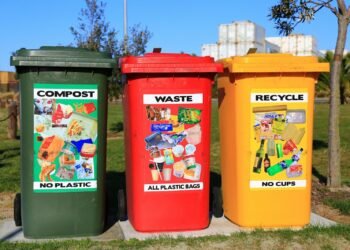


Most people try to recycle coffee cups, and most of the time it does not work. A paper cup looks like paper, but the inside is coated with a thin layer of plastic that keeps your drink from soaking through.

The hidden plastic layer
The inner coating is polyethylene, a type of plastic, according to American University’s magazine.
Most recycling markets do not accept the cups because it is difficult to separate the paper from that plastic lining.
A few cities are different
Only a handful of cities, including Washington DC, San Francisco, Seattle and New York, collect the cups, the same report says. Elsewhere, the cup usually belongs in the trash.
Get the Eco Business News newsletter. Free.
Plain news on eco, business and data centers. No spam.
What about the lid?
Plastic lids are often number 6 plastic and are recyclable in some places. Some programs reject black or dark lids because optical sorters cannot see them.
The fine print
Rules depend on your city. Check your local recycling list before tossing a cup in either bin.
Why it matters
Billions of coffee cups are used every year. The simplest win is a reusable mug, which skips the lining problem entirely.
Try it yourself
Think you know your bins? Play Sort It Right, our free recycling game, and see how many of 12 everyday items you can sort before the clock runs out.
Tell us what you are building and what changed. Our newsroom reads every submission.
Submit your companySources: American University Magazine.
Key takeaways on recycle coffee cups
Here is the short version on recycle coffee cups. The inner coating is polyethylene, a type of plastic, according to American University’s magazine. Most recycling markets do not accept the cups because it is difficult to separate the paper from that plastic lining. Only a handful of cities, including Washington DC, San Francisco, Seattle and New York, collect the cups, the same report says. Plastic lids are often number 6 plastic and are recyclable in some places. Rules depend on your city. Billions of coffee cups are used every year. Think you know your bins?
Use these points on recycle coffee cups as a starting point, check the numbers against your own home or business, and share what you learn with someone who can use it.
Recycle coffee cups in practice
When you look at recycle coffee cups, start with the basics and then check how they apply to your own situation. A clear view of recycle coffee cups helps you ask better questions and avoid costly mistakes.
In short, recycle coffee cups is easier to judge when you use plain numbers, trusted sources, and a simple checklist.
Related reading
Ball Corporation recycled aluminum: how cans keep getting a second life | Aluminum can recycling: recycled metal saves 95 percent of the energy | Global e-waste hit 62 million tonnes, and little is recycled
For more background, see the U.S. Department of Energy.
Quick recap
- The short version: Listen to this article 1x 1.25x 1.5x (function(){var w=document.currentScript.parentNode;var b=w.querySelector(‘.ebn-lb’),t=w.querySelector(‘.ebn-lt’),s=w.querySelector(‘.ebn-ls’);if(!(‘speechSynthesis’ in window)){w.style.display=’none’;return}var root=w.closest(‘.content-inner’)||document;var q=[],i=0,on=false;function build(){q=[];root.querySelectorAll(‘p,h2’).forEach(function(e){if(e.closest(‘.ebn-listen,.ebn-sub-end’))return;var x=e.textContent.trim();if(x.length>2)q.push(x)});return q}function words(){return build().join(‘ ‘).split(/\s+/).length}t.textContent=Math.max(1,Math.round(words()/160))+’ min listen’;function say(){if(!on||i>=q.length){on=false;b.textContent=’Listen to this article’;b.className=’ebn-lb’;i=0;return}var u=new SpeechSynthesisUtterance(q[i]);u.rate=parseFloat(s.value);u.lang=’en-US’;u.onend=function(){i++;say()};speechSynthesis.speak(u)}b.onclick=function(){if(on){on=false;speechSynthesis.cancel();b.textContent=’Listen to this article’;b.className=’ebn-lb’;return}build();i=0;on=true;b.textContent=’Stop listening’;b.className=’ebn-lb ebn-on’;speechSynthesis.cancel();say()};s.onchange=function(){if(on){speechSynthesis.cancel();say()}};window.addEventListener(‘beforeunload’,function(){speechSynthesis.cancel()})})(); Most people try to recycle coffee cups, and most of the time it does not work.
- The hidden plastic layer: The inner coating is polyethylene, a type of plastic, according to American University’s magazine.
- A few cities are different: Only a handful of cities, including Washington DC, San Francisco, Seattle and New York, collect the cups, the same report says.
- What about the lid?: Plastic lids are often number 6 plastic and are recyclable in some places.
- The fine print: Rules depend on your city.
- Why it matters: Billions of coffee cups are used every year.
- Try it yourself: Play Sort It Right , our free recycling game, and see how many of 12 everyday items you can sort before the clock runs out.
Questions readers ask
What should I know about the short version?
A paper cup looks like paper, but the inside is coated with a thin layer of plastic that keeps your drink from soaking through.
What should I know about the hidden plastic layer?
Most recycling markets do not accept the cups because it is difficult to separate the paper from that plastic lining.
What should I know about a few cities are different?
Elsewhere, the cup usually belongs in the trash. Get the Eco Business News newsletter.
What should I know about what about the lid?
Some programs reject black or dark lids because optical sorters cannot see them.
What should I know about the fine print?
Check your local recycling list before tossing a cup in either bin.
What should I know about why it matters?
The simplest win is a reusable mug, which skips the lining problem entirely.
Test yourself
- In one sentence, how would you explain the short version to a friend? Compare your answer with the section above.
- In one sentence, how would you explain the hidden plastic layer to a friend? Compare your answer with the section above.
- In one sentence, how would you explain a few cities are different to a friend? Compare your answer with the section above.
- In one sentence, how would you explain what about the lid to a friend? Compare your answer with the section above.
Share this guide
If this guide on recycle coffee cups was useful, send it to a colleague, a neighbor or your team. Use the share buttons at the top of the page to post it on LinkedIn, email it, or copy the link.