







• Advertise
  • Contact
Wednesday, March 25, 2026
  • Login
EcoBusinessNews
  • Home
  • About
  • News
    The Grid Can’t Keep Up. Here’s What Smart Organizations Are Doing Instead.

    The Grid Can’t Keep Up. Here’s What Smart Organizations Are Doing Instead.

    Why Many High-Energy Manufacturers Are Still Sitting on the Sidelines of the Energy Transition

    Energy Capacity Assessment

    green and black rope

    The Green Energy Lie CEOs Still Believe (And Why It’s Costing Them Millions)

    woman in black shirt sitting on chair

    Investing in the Quick-Service Restaurant Industry: A Sector Built on Franchises and Scalable Cash Flow

    Modern library with expansive bookshelves and seating areas.

    The Industrial Power Shift: Why Large Manufacturers Are Turning to Onsite Generation

    City skyline at night seen from a ferry deck.

    AI’s Power Problem: Why Energy Infrastructure Is Becoming the Bottleneck for Data Center Growth

    The Energy Infrastructure Race Behind AI, Data Centers, and the New Industrial Economy

    The Energy Infrastructure Race Behind AI, Data Centers, and the New Industrial Economy

    When a College Kid Points You Toward the Future

    When a College Kid Points You Toward the Future

    The New Race for Electricity

    The New Race for Electricity

  • Impact Investing
  • Eco-Innovators
  • Renewable Energy
  • Partner w/ Us
No Result
View All Result
  • Home
  • About
  • News
    The Grid Can’t Keep Up. Here’s What Smart Organizations Are Doing Instead.

    The Grid Can’t Keep Up. Here’s What Smart Organizations Are Doing Instead.

    Why Many High-Energy Manufacturers Are Still Sitting on the Sidelines of the Energy Transition

    Energy Capacity Assessment

    green and black rope

    The Green Energy Lie CEOs Still Believe (And Why It’s Costing Them Millions)

    woman in black shirt sitting on chair

    Investing in the Quick-Service Restaurant Industry: A Sector Built on Franchises and Scalable Cash Flow

    Modern library with expansive bookshelves and seating areas.

    The Industrial Power Shift: Why Large Manufacturers Are Turning to Onsite Generation

    City skyline at night seen from a ferry deck.

    AI’s Power Problem: Why Energy Infrastructure Is Becoming the Bottleneck for Data Center Growth

    The Energy Infrastructure Race Behind AI, Data Centers, and the New Industrial Economy

    The Energy Infrastructure Race Behind AI, Data Centers, and the New Industrial Economy

    When a College Kid Points You Toward the Future

    When a College Kid Points You Toward the Future

    The New Race for Electricity

    The New Race for Electricity

  • Impact Investing
  • Eco-Innovators
  • Renewable Energy
  • Partner w/ Us
EcoBusinessNews
No Result
View All Result
EcoBusinessNews

Solar vs. Batteries: When Is PV Enough, and When Does Storage Tip the Balance?

Eco Business News by Eco Business News
September 25, 2025
in News
399 25
0
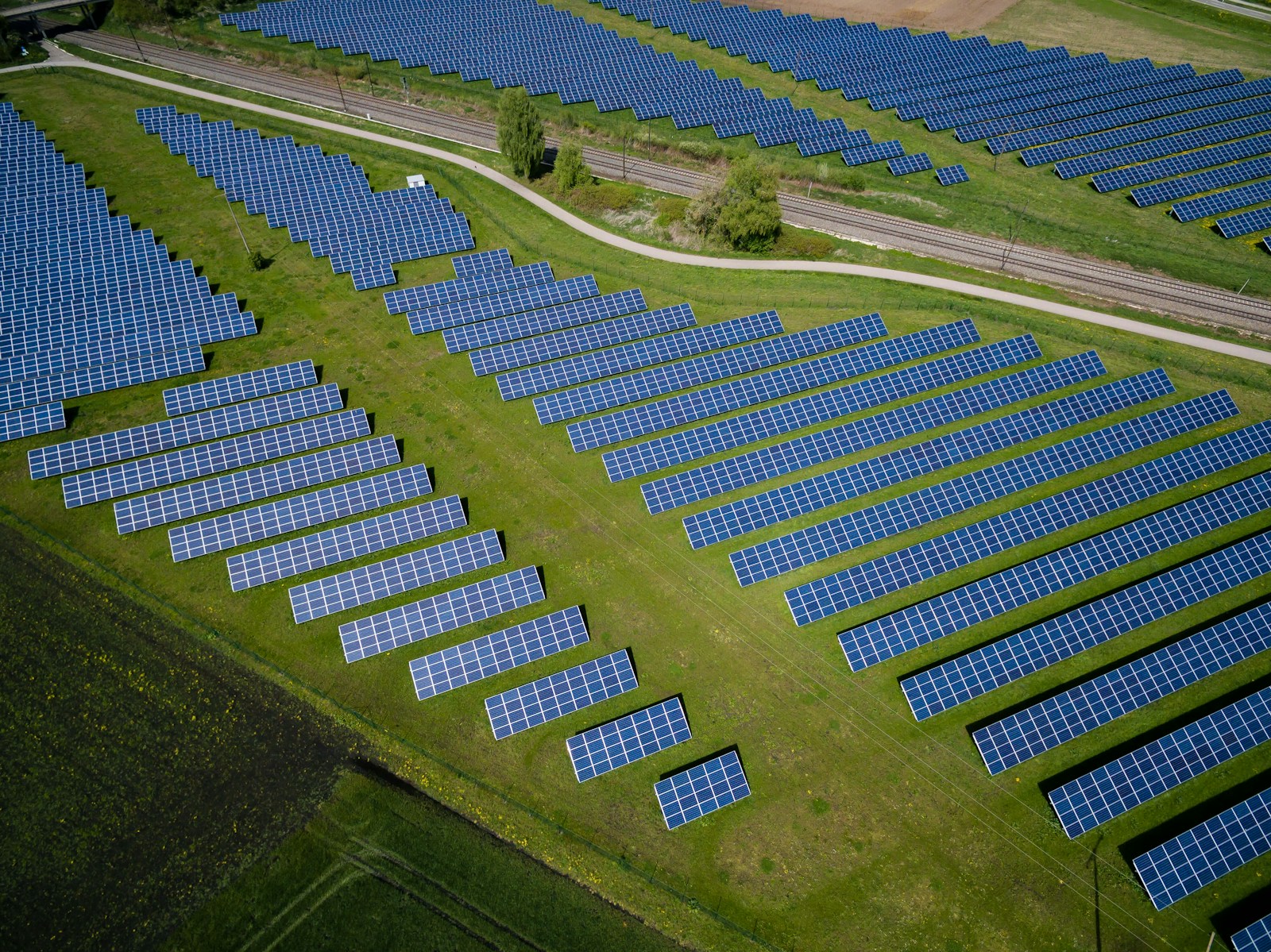
aerial photography of grass field with blue solar panels
587
SHARES
3.3k
VIEWS
Summarize with ChatGPTShare to Facebook

Solar PV has become the backbone of the global renewable energy transition. Costs continue to fall, efficiency keeps improving, and deployment is accelerating across residential rooftops, commercial campuses, and utility-scale fields.

But as penetration rises, so does a key question: is solar alone enough, or does the real value come when it’s paired with batteries?


The Case for Solar Alone

For many projects, especially in markets with strong policy support, solar without batteries is still the most cost-effective choice.

  • Lower upfront cost: Panels alone minimize capital requirements, making projects easier to finance and faster to deploy.
  • Net metering benefits: In jurisdictions with full retail net metering, sending excess energy to the grid can make batteries unnecessary.
  • Simplicity: Fewer moving parts, lower O&M, and reduced complexity in permitting and interconnection.

This is why solar-only installations continue to dominate global deployment numbers.


The Case for Solar + Batteries

Adding storage changes the equation — not just for project economics, but for grid value and customer resilience.

  • Curtailment reduction: In regions where solar output exceeds grid capacity during the day, batteries allow operators to store excess and discharge later.
  • Peak shaving: Batteries discharge during expensive peak periods, improving project ROI.
  • Resilience: For critical facilities (hospitals, data centers, schools), pairing PV with batteries ensures backup power when the grid goes down.
  • Market revenues: Batteries can participate in ancillary services markets, frequency regulation, and demand response, creating multiple revenue streams.

When Batteries Lead

In some markets, storage economics are becoming compelling enough to drive projects on their own. California, Australia, and parts of Europe are seeing battery-first deployments that may or may not include solar, depending on grid needs.

In these cases, storage is as much about grid stability as it is about energy independence.


Factors That Tip the Balance

So when is solar enough, and when does it make sense to add batteries? Key factors include:

  • Policy environment: Net metering, capacity markets, and tax credits all shift the economics.
  • Grid conditions: Congestion, curtailment, and reliability challenges push more projects toward solar + storage.
  • Customer priorities: If resilience or carbon targets are top priorities, batteries are hard to ignore.
  • Scale of deployment: Utility-scale projects may favor solar-only if they can export at scale, while C&I or residential customers often want storage for resilience and bill management.

Hybrid Energy Systems as a Bridge

Increasingly, hybrid systems — solar + storage + cogeneration — are becoming a standard design for large campuses and data-center operators. These systems deliver reliability, maximize renewable penetration, and reduce lifecycle costs.

👉 If your organization is exploring hybrid system design or conducting a site assessment, Pacifico Energy provides feasibility studies and integrated strategies. For more information, reach out at phil@pacificoenergy.com.


Join the Conversation

EcoBusinessNews wants to hear from solar and storage professionals:

  • Where do you see solar-only projects still thriving?
  • When are batteries indispensable?
  • What’s working (or failing) in your region’s policy and market design?

💬 Share your perspectives — your field notes will help shape the debate on how PV and storage evolve together.


👉 For more stories on solar, storage, and hybrid systems, explore our Sustainability Playbook.
SummarizeShare235
Eco Business News

Eco Business News

...a dedicated storyteller shining a light on sustainable business. With 10 years covering clean tech and circular economies for outlets like Eco-Business News and The Guardian, she holds an MSc in Sustainability from Stanford. Jane’s knack for decoding green policies makes her a go-to source for eco-entrepreneurs. Off the clock, she’s composting like a pro or biking through her local forest. Dive into her articles for sharp, planet-friendly insights.

Related Stories

The Grid Can’t Keep Up. Here’s What Smart Organizations Are Doing Instead.

The Grid Can’t Keep Up. Here’s What Smart Organizations Are Doing Instead.

by Eco Business News
March 25, 2026
0

#EnergyIndependence #MissionCritical #Industrial #DataCenters #Manufacturing #BehindTheMeter #IPP #EnergyStrategy #Infrastructure #AI #LifeSciences #Semiconductors #PacificoEnergy

Why Many High-Energy Manufacturers Are Still Sitting on the Sidelines of the Energy Transition

Energy Capacity Assessment

by Eco Business News
March 23, 2026
0

Most teams still treat energy like a procurement line item.It’s not. It’s a growth constraint.If you operate large-scale facilities, you’re already seeing it:• Utility timelines stretching• Interconnection delays...

green and black rope

The Green Energy Lie CEOs Still Believe (And Why It’s Costing Them Millions)

by Eco Business News
March 19, 2026
0

Sustainability isn’t failing because it’s too expensive—it’s failing because most companies are solving the wrong problem. For the past decade, corporate sustainability has been sold as a moral...

woman in black shirt sitting on chair

Investing in the Quick-Service Restaurant Industry: A Sector Built on Franchises and Scalable Cash Flow

by Eco Business News
March 11, 2026
0

The quick-service restaurant (QSR) industry has quietly become one of the most powerful business models in the American economy. While many people experience the sector simply as fast...

📬 Sign up Now

...for exclusive insights from EcoBusinessNews.com — it's free.

Thank you!

You have successfully joined our subscriber list.

Recent Posts

  • The Grid Can’t Keep Up. Here’s What Smart Organizations Are Doing Instead.
  • Energy Capacity Assessment
  • The Green Energy Lie CEOs Still Believe (And Why It’s Costing Them Millions)
  • Investing in the Quick-Service Restaurant Industry: A Sector Built on Franchises and Scalable Cash Flow

Categories

  • Circular Economy
  • Eco-City
  • Eco-Innovators
  • Green Market Pulse
  • Impact Investing
  • News
  • Policy Pulse
  • Profit & Planet
  • Renewable Energy
  • Eco Business News – Latest Green Business Updates
  • Contact
  • Advertise
  • Subscribe
  • Privacy Policy
  • About Us

© 2026 JNews - Premium WordPress news & magazine theme by Jegtheme.

Welcome Back!

Login to your account below

Forgotten Password?

Retrieve your password

Please enter your username or email address to reset your password.

Log In

Add New Playlist

No Result
View All Result
  • Home
  • About Us
  • News
  • Advertise
  • Partner
  • Privacy Policy
  • Contact

© 2026 JNews - Premium WordPress news & magazine theme by Jegtheme.