
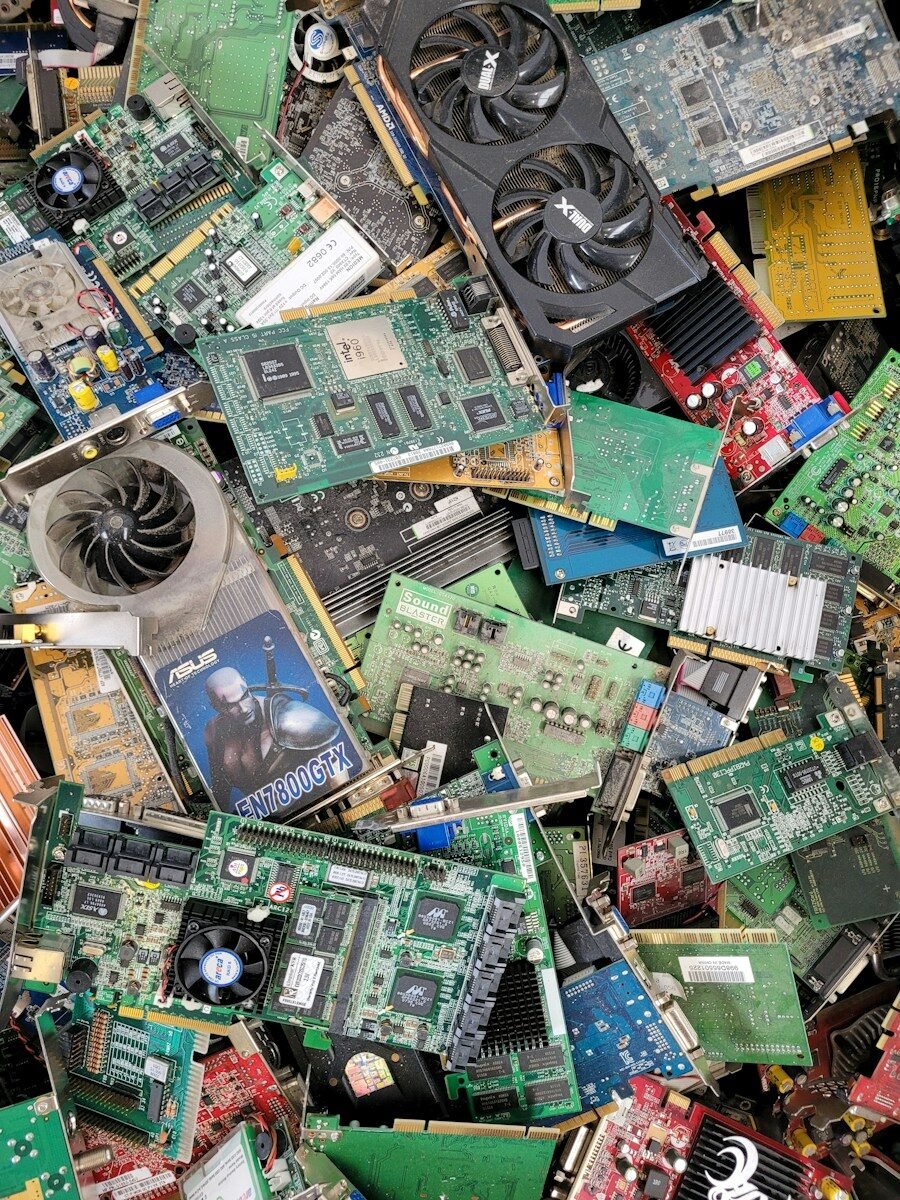

E-waste recycling is the process of collecting old electronics and recovering what can be reused or turned back into raw material. For a company, it is also a data security and compliance matter, so it deserves a plan and not just a storage closet.

What counts as e-waste
Laptops, phones, monitors, network gear, printers and servers all count. Many of these contain metals such as copper, aluminum and small amounts of gold, along with plastics and batteries. Some parts contain substances that should never end up in a landfill.
Why companies should care
Old drives can hold sensitive data, so wiping and destroying them correctly protects the business. Rules on electronic waste also differ by state, and fines can follow careless disposal. Handling it well shows customers and auditors that the company takes its environmental duties seriously.
How to choose a recycler
Ask for third party certification and for written proof of how each item was handled. A good recycler gives you a certificate of destruction for drives and a report on what was recovered. Ask where the material goes after it leaves their site, because responsible recyclers can answer that clearly.
Reuse comes before recycling
Equipment that still works is worth more as a donation or resale than as scrap. Many companies refresh laptops on a fixed schedule and send the working ones to refurbishers. That extends the life of the product and keeps it out of the waste stream longer. The U.S. Environmental Protection Agency keeps practical guidance on donation and recycling.
A simple starting plan
Keep a list of what you own, set a refresh cycle, pick one certified partner and keep every certificate on file. That is enough to turn e-waste recycling from a problem into a routine. It also fits neatly inside a wider circular approach, as we explain in our circular economy guide.
Get the Eco Business News newsletter. Free.
Plain news on eco, business and data centers. No spam.