
Follow the heat path from AI chip to outside air: cold plates, CDUs, chillers, cooling towers, and why flow control truly matters.
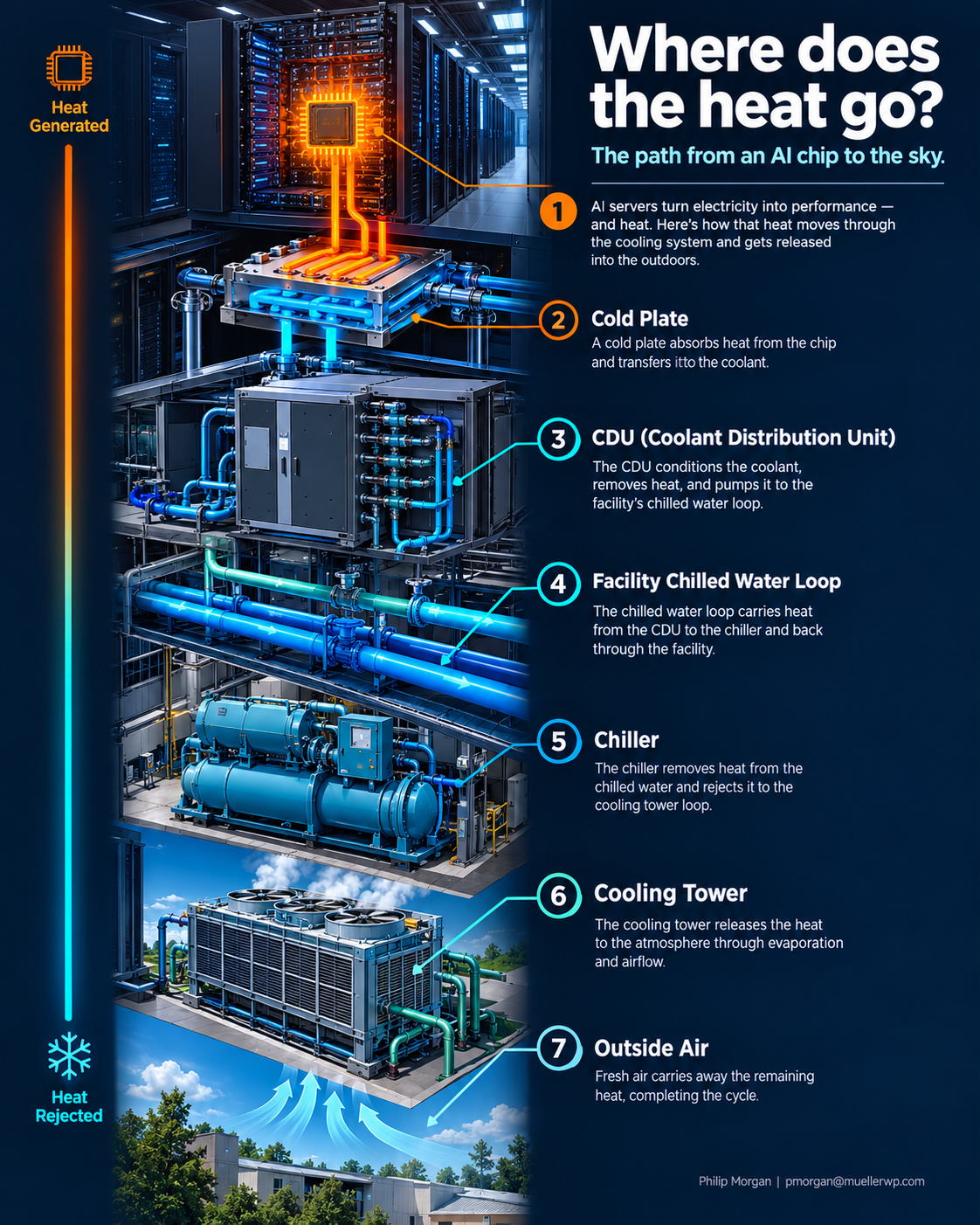
Every AI chip turns electrical power into computing, and the heat it produces has to go somewhere. In a high-density AI data center, that heat moves through a chain of equipment before it reaches the outdoors.
It starts at the cold plate, mounted on the processor, which moves heat into circulating coolant. The coolant then goes to a Coolant Distribution Unit (CDU), which manages circulation and, in many liquid-cooling designs, transfers heat between the technology loop and the facility water loop. From there, facility piping and pumps carry the heat to a chiller or another heat-rejection device. In a typical water-cooled plant, a cooling tower releases that heat to the air.
The path changes with the design. Direct-to-chip systems, air cooling, and dry coolers all rearrange the chain. The job stays the same: move heat reliably from the IT equipment to its final destination.
That is why flow control matters. Valves set how coolant moves through each circuit, isolate equipment for maintenance, and let teams take one piece offline without shutting down the rest. Engineers choosing components early in design, and commissioning teams checking them against design intent, have a direct effect on how well the system runs.
For MEP engineers, consulting engineers, and mechanical contractors working on these projects, the questions to settle early are which components fit the application, how the circuit will be isolated, and what documentation the project needs. If you are developing a specification or preparing submittals, you can request technical cut sheets and specification language for your project.
What do you see as the biggest reliability risk in your data center cooling designs?