



The conversation about AI’s environmental footprint has mostly centered on electricity. But water may turn AI infrastructure into a local political issue faster than power ever will, because water shortages show up immediately in wells, water bills, and farm fields, not in a distant grid interconnection queue.
The Numbers Are Bigger Than Most People Realize
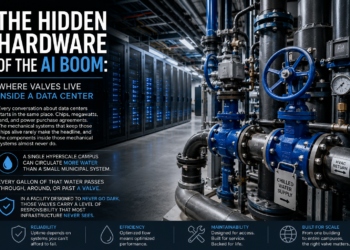
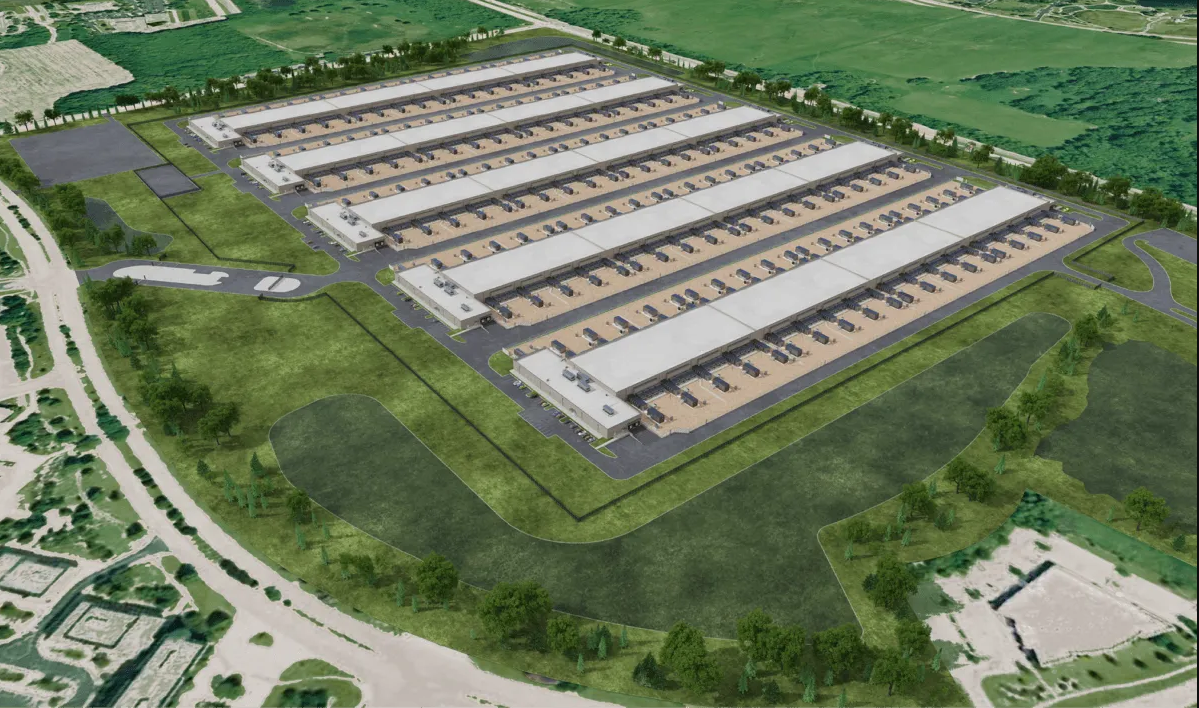
A single AI text response can use 10 to 50 milliliters of water in the cooling and electricity generation behind it, compared with about 0.6 milliliters for a standard search query. An AI-generated image uses roughly 23 milliliters. Multiply that by billions of queries and the totals get large fast. A typical mid-sized data center consumes around 110 million gallons of water a year, about what a town of 50,000 people uses annually. Hyperscale campuses in hot climates can draw up to 5 million gallons a day. Google’s global data center water use recently reached 8.1 billion gallons, and a single Virginia facility alone used 173.2 million gallons in one year.
Why Cooling Is the Whole Story
Evaporative cooling is efficient on electricity but heavy on water, using millions of gallons to pull heat out of servers. Air-cooled systems flip that trade, using far less water but far more electricity to run compressor fans. The industry tracks this balance with Water Usage Effectiveness, or WUE, calculated as annual water consumption divided by IT equipment energy use. The lower the number, the better the facility is performing.
Newer approaches are changing the trade-off entirely. Direct-to-chip liquid cooling can cut water needs by up to 95 percent compared with evaporative systems, and immersion cooling removes evaporative water use from the equation altogether.
Communities Are Already Pushing Back
Ireland paused new data center approvals around Dublin after facilities were pulling more than 20 percent of the country’s metered electricity, a power issue that came bundled with water and land concerns. Community pushback over water use, noise, and grid strain has already contributed to an estimated 64 billion dollars in delayed data center projects nationally. In water-stressed regions, the friction is direct: depleted wells, strained municipal supplies, and competition with agriculture for the same limited water.
Where the Fix Is Headed
The path forward looks a lot like the path on power: raise operating temperatures within ASHRAE guidelines to cut cooling loads, shift toward liquid cooling, and build water recirculation and treatment systems aimed at zero net consumption. The operators who solve this early will have an easier time getting community and regulatory buy-in for the next project, which is quickly becoming as valuable as the site itself.