





Sustainability isn’t failing because it’s too expensive—it’s failing because most companies are solving the wrong problem.
For the past decade, corporate sustainability has been sold as a moral obligation.
Lower emissions. Hit ESG targets. Publish a glossy report. Repeat.
And yet—behind closed doors—most executives will admit the same thing:
It’s not moving the needle.
Not on costs.
Not on reliability.
Not on real operational risk.
Here’s the uncomfortable truth:
The problem isn’t that sustainability is too expensive. It’s that most companies are approaching energy backwards.
The Real Cost Nobody Talks About
Pull up any large industrial or commercial electricity bill and you’ll see it:
Not just energy charges—but demand charges.
These are penalties for how much power you pull at peak moments. And for many facilities, they quietly make up 30–70% of the total bill.
Now layer in:
- Grid volatility
- Rising utility rates
- Increasing outages and instability
- Electrification mandates
What you get isn’t just a cost problem—it’s a control problem.
And most “green initiatives” don’t touch it.
Installing rooftop solar to offset a portion of usage? Helpful, but partial.
Buying renewable energy credits? Optics, not operations.
Signing long-term utility contracts? Still dependent on the grid.
So companies keep spending money… without fixing the core issue.
The Shift Smart Operators Are Making
A small but growing group of companies is taking a different approach.
They’re not asking: “How do we buy cleaner energy?”
They’re asking:
“How do we control energy entirely?”
That shift changes everything.
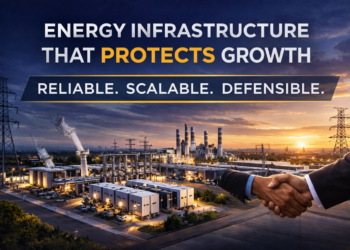
Instead of treating energy like a utility expense, they treat it like infrastructure—something you can design, optimize, and own (or at least control operationally).
This is where behind-the-meter power comes in:
- Onsite generation
- Integrated storage
- Intelligent load management
Not as a sustainability add-on—but as a core business strategy.
The result?
- Lower and more predictable costs
- Reduced exposure to demand charges
- Increased resilience during outages
- Immediate emissions reductions tied to real operations
No offsets. No guesswork.
Why This Isn’t Going Mainstream (Yet)
If the benefits are so obvious, why isn’t everyone doing it?
Two reasons:
1. Legacy thinking
Energy has always been “someone else’s problem”—the utility’s domain. Changing that mindset takes time.
2. Capital constraints
Most companies don’t want to deploy millions upfront into energy infrastructure, even if the ROI is strong.
That second barrier is now collapsing.
New models are emerging where third parties:
- Fund the system
- Build it
- Own and maintain it
And the customer simply pays for the power—often at a lower, more stable rate.
In other words: infrastructure without the capex headache.
The Next Competitive Edge
For years, sustainability was framed as a branding exercise.
That era is over.
Energy is becoming a competitive differentiator—right alongside labor, logistics, and supply chain.
Companies that get ahead of this shift will:
- Lock in long-term cost advantages
- Avoid grid-related disruptions
- Meet regulatory pressure without scrambling
- Strengthen margins in ways competitors can’t easily replicate
Companies that don’t?
They’ll keep chasing incremental improvements while their energy exposure quietly grows.
The Bottom Line
The future of sustainable business isn’t about buying greener energy.
It’s about owning the outcome.
And the companies that figure that out first won’t just be more sustainable.
They’ll be more profitable. More resilient. And a lot harder to compete wi