





• Advertise
  • Contact
Sunday, April 26, 2026
  • Login
EcoBusinessNews
  • Home
  • About
  • News
    a bunch of blue wires connected to each other

    Data Center World 2026 Highlights the Industry’s Defining Challenge: Power

    Why Many High-Energy Manufacturers Are Still Sitting on the Sidelines of the Energy Transition

    How to Work With Hyperscale Data Centers: Energy, Water, and the New Rules of Infrastructure Partnerships

    Why Many High-Energy Manufacturers Are Still Sitting on the Sidelines of the Energy Transition

    America’s AI Boom Has a Power Problem. Pacifico Energy Is Solving It.

    The Grid Can’t Keep Up. Here’s What Smart Organizations Are Doing Instead.

    The Grid Can’t Keep Up. Here’s What Smart Organizations Are Doing Instead.

    Why Many High-Energy Manufacturers Are Still Sitting on the Sidelines of the Energy Transition

    Energy Capacity Assessment

    green and black rope

    The Green Energy Lie CEOs Still Believe (And Why It’s Costing Them Millions)

    woman in black shirt sitting on chair

    Investing in the Quick-Service Restaurant Industry: A Sector Built on Franchises and Scalable Cash Flow

    Modern library with expansive bookshelves and seating areas.

    The Industrial Power Shift: Why Large Manufacturers Are Turning to Onsite Generation

    City skyline at night seen from a ferry deck.

    AI’s Power Problem: Why Energy Infrastructure Is Becoming the Bottleneck for Data Center Growth

  • Impact Investing
  • Eco-Innovators
  • Renewable Energy
  • Partner w/ Us
No Result
View All Result
  • Home
  • About
  • News
    a bunch of blue wires connected to each other

    Data Center World 2026 Highlights the Industry’s Defining Challenge: Power

    Why Many High-Energy Manufacturers Are Still Sitting on the Sidelines of the Energy Transition

    How to Work With Hyperscale Data Centers: Energy, Water, and the New Rules of Infrastructure Partnerships

    Why Many High-Energy Manufacturers Are Still Sitting on the Sidelines of the Energy Transition

    America’s AI Boom Has a Power Problem. Pacifico Energy Is Solving It.

    The Grid Can’t Keep Up. Here’s What Smart Organizations Are Doing Instead.

    The Grid Can’t Keep Up. Here’s What Smart Organizations Are Doing Instead.

    Why Many High-Energy Manufacturers Are Still Sitting on the Sidelines of the Energy Transition

    Energy Capacity Assessment

    green and black rope

    The Green Energy Lie CEOs Still Believe (And Why It’s Costing Them Millions)

    woman in black shirt sitting on chair

    Investing in the Quick-Service Restaurant Industry: A Sector Built on Franchises and Scalable Cash Flow

    Modern library with expansive bookshelves and seating areas.

    The Industrial Power Shift: Why Large Manufacturers Are Turning to Onsite Generation

    City skyline at night seen from a ferry deck.

    AI’s Power Problem: Why Energy Infrastructure Is Becoming the Bottleneck for Data Center Growth

  • Impact Investing
  • Eco-Innovators
  • Renewable Energy
  • Partner w/ Us
EcoBusinessNews
No Result
View All Result
EcoBusinessNews

Investing in the Quick-Service Restaurant Industry: A Sector Built on Franchises and Scalable Cash Flow

Eco Business News by Eco Business News
March 11, 2026
in News
394 29
0
woman in black shirt sitting on chair
586
SHARES
3.3k
VIEWS
Summarize with ChatGPTShare to Facebook

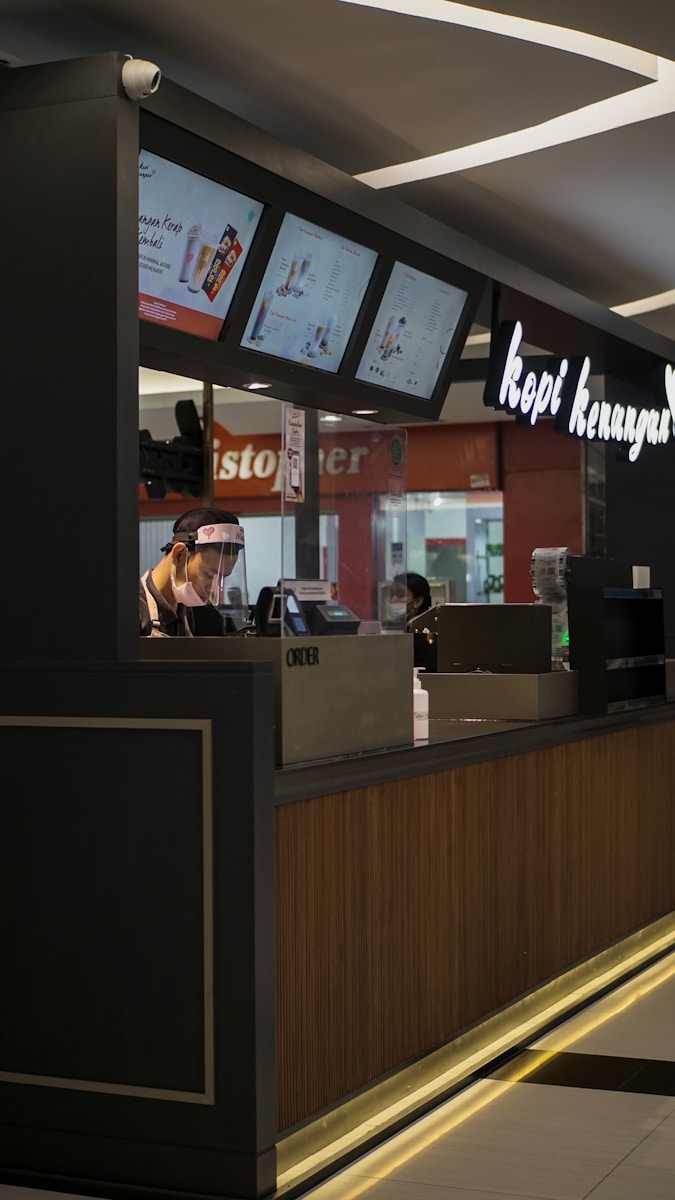
The quick-service restaurant (QSR) industry has quietly become one of the most powerful business models in the American economy. While many people experience the sector simply as fast food — burgers, tacos, coffee, pizza — investors see something different.

They see scalable franchise systems, global brands, and predictable royalty streams.

For public market investors, the QSR sector represents a unique hybrid between consumer brands and infrastructure. The companies that dominate the industry are not just restaurants — they are franchise platforms generating recurring revenue from thousands of locations worldwide.

Understanding how the QSR model works is essential for anyone evaluating restaurant stocks.


The Massive Scale of the U.S. QSR Industry

Quick-service restaurants represent the largest segment of the restaurant industry in the United States.

Industry research estimates that the U.S. quick-service restaurant market generates hundreds of billions in annual revenue, with projections showing continued expansion as consumer demand for convenience grows.

There are also nearly 200,000 quick-service restaurant establishments operating across the country, the majority of which are franchised units rather than corporate-owned locations.

Several macro trends continue to support the sector:

  • convenience-driven lifestyles
  • mobile ordering and delivery platforms
  • urbanization
  • value-focused dining
  • global expansion of U.S. restaurant brands

These structural drivers help explain why many QSR companies have produced strong long-term shareholder returns.


Why Investors Like Franchise Restaurant Stocks

Many of the most successful restaurant companies are not primarily restaurant operators.

They are franchisors.

The model works like this:

  1. Independent operators invest capital to build and run restaurants.
  2. The parent company licenses the brand and operating system.
  3. Franchisees pay royalties and marketing fees based on revenue.

This creates a powerful economic structure.

The franchisor collects revenue while franchisees carry much of the operating risk.

That structure is why many of the largest restaurant companies in the world rely heavily on franchising.

For example, Yum! Brands — which owns KFC, Taco Bell, Pizza Hut, and Habit Burger — operates a global system of over 63,000 restaurants across more than 150 countries, the vast majority of which are franchised locations.

This approach allows the company to expand rapidly while keeping capital requirements relatively low.


The Largest Public QSR Companies

Several publicly traded companies dominate the quick-service restaurant sector.

These companies control some of the most recognizable brands in the world.

McDonald’s (NYSE: MCD)

Often considered the gold standard of franchising, McDonald’s generates revenue from:

  • franchise royalties
  • real estate leases
  • company-operated restaurants

The company has led U.S. restaurant chains by market capitalization for decades.

Restaurant Brands International (NYSE: QSR)

Restaurant Brands owns several globally recognized chains including:

  • Burger King
  • Tim Hortons
  • Popeyes

The company uses a heavily franchised model designed to maximize global expansion.

Yum! Brands (NYSE: YUM)

Yum! Brands is one of the largest restaurant companies in the world and the parent company of:

  • KFC
  • Taco Bell
  • Pizza Hut
  • Habit Burger Grill

Chipotle Mexican Grill (NYSE: CMG)

Chipotle operates a different model compared with traditional franchise chains. Most of its restaurants are company-owned, allowing it to maintain tighter control over operations and brand experience.


Key Metrics Investors Watch in QSR Stocks

Investors evaluating restaurant companies typically focus on a few critical metrics.

Same-store sales growth

Also known as “comps,” this measures sales growth at existing locations.

Strong comps usually indicate:

  • strong brand demand
  • pricing power
  • operational efficiency

Unit expansion

Restaurant chains often grow through new store openings.

Chains with strong development pipelines can expand quickly, especially internationally.

Franchise vs company-owned mix

Franchise systems often produce:

  • higher margins
  • lower capital intensity
  • more predictable revenue streams

Average unit volume (AUV)

This metric measures the average annual sales per restaurant.

Higher AUVs generally indicate stronger brand demand and healthier franchise economics.


Major Trends Shaping the QSR Sector

The industry is evolving rapidly as technology and consumer preferences change.

Digital ordering

Mobile apps, kiosks, and delivery platforms now play a central role in restaurant sales.

Many chains generate significant revenue through digital channels.

Drive-through innovation

Drive-through restaurants remain one of the most efficient formats in food service.

Many chains are redesigning stores to prioritize drive-through traffic.

Automation and AI

Some restaurants are experimenting with automation for:

  • kitchen operations
  • order taking
  • inventory management

These technologies could significantly improve labor efficiency.

Value competition

In periods of inflation or economic pressure, quick-service restaurants often focus heavily on value promotions to retain customers.


Risks Investors Should Understand

Despite the sector’s strength, QSR stocks are not risk-free.

Several factors can affect profitability.

Commodity inflation

Restaurants rely heavily on ingredients like:

  • beef
  • chicken
  • potatoes
  • dairy

Price swings can impact margins.

Labor costs

Rising wages in some states have increased operating costs for restaurant operators.

Brand fatigue

Even large chains can experience declining traffic if they fail to innovate.

For example, some brands have reduced U.S. locations after years of overexpansion and intense competition.


The Long-Term Investment Thesis

The quick-service restaurant industry combines several characteristics that investors tend to favor:

  • global brand power
  • franchise-driven expansion
  • recurring royalty revenue
  • resilient consumer demand

For decades, the sector has produced companies capable of generating billions in annual revenue and building global restaurant networks.

In many ways, QSR companies operate less like restaurants and more like brand platforms powered by thousands of independent operators.

For investors willing to study the economics behind the franchise model, the industry remains one of the most interesting consumer sectors in the public markets.


SummarizeShare234
Eco Business News

Eco Business News

...a dedicated storyteller shining a light on sustainable business. With 10 years covering clean tech and circular economies for outlets like Eco-Business News and The Guardian, she holds an MSc in Sustainability from Stanford. Jane’s knack for decoding green policies makes her a go-to source for eco-entrepreneurs. Off the clock, she’s composting like a pro or biking through her local forest. Dive into her articles for sharp, planet-friendly insights.

Related Stories

a bunch of blue wires connected to each other

Data Center World 2026 Highlights the Industry’s Defining Challenge: Power

by Eco Business News
April 15, 2026
0

By Phil Morgan, Positive Phil Inc. The data center industry is growing fast. However, it is also running into a hard limit: power. At Data Center World 2026,...

Why Many High-Energy Manufacturers Are Still Sitting on the Sidelines of the Energy Transition

How to Work With Hyperscale Data Centers: Energy, Water, and the New Rules of Infrastructure Partnerships

by Eco Business News
April 10, 2026
0

The data center industry is no longer just a technology story. It’s an energy story.It’s a water story.And increasingly, it’s a relationship story. Hyperscalers—companies like Amazon, Microsoft, Google,...

Why Many High-Energy Manufacturers Are Still Sitting on the Sidelines of the Energy Transition

America’s AI Boom Has a Power Problem. Pacifico Energy Is Solving It.

by Eco Business News
March 30, 2026
0

The energy infrastructure firm just secured the largest power generation permit in U.S. history — and it's only getting started. The artificial intelligence revolution is hungry. Not just...

The Grid Can’t Keep Up. Here’s What Smart Organizations Are Doing Instead.

The Grid Can’t Keep Up. Here’s What Smart Organizations Are Doing Instead.

by Eco Business News
March 25, 2026
0

#EnergyIndependence #MissionCritical #Industrial #DataCenters #Manufacturing #BehindTheMeter #IPP #EnergyStrategy #Infrastructure #AI #LifeSciences #Semiconductors #PacificoEnergy

📬 Sign up Now

...for exclusive insights from EcoBusinessNews.com — it's free.

Thank you!

You have successfully joined our subscriber list.

Recent Posts

  • Data Center World 2026 Highlights the Industry’s Defining Challenge: Power
  • How to Work With Hyperscale Data Centers: Energy, Water, and the New Rules of Infrastructure Partnerships
  • America’s AI Boom Has a Power Problem. Pacifico Energy Is Solving It.
  • The Grid Can’t Keep Up. Here’s What Smart Organizations Are Doing Instead.

Categories

  • Circular Economy
  • Eco-City
  • Eco-Innovators
  • Green Market Pulse
  • Impact Investing
  • News
  • Policy Pulse
  • Profit & Planet
  • Renewable Energy
  • Eco Business News – Latest Green Business Updates
  • Contact
  • Advertise
  • Subscribe
  • Privacy Policy
  • About Us

© 2026 JNews - Premium WordPress news & magazine theme by Jegtheme.

Welcome Back!

Login to your account below

Forgotten Password?

Retrieve your password

Please enter your username or email address to reset your password.

Log In

Add New Playlist

No Result
View All Result
  • Home
  • About Us
  • News
  • Advertise
  • Partner
  • Privacy Policy
  • Contact

© 2026 JNews - Premium WordPress news & magazine theme by Jegtheme.