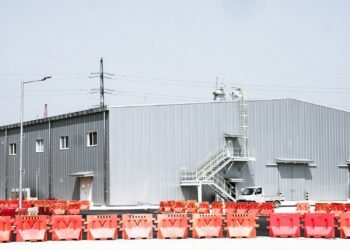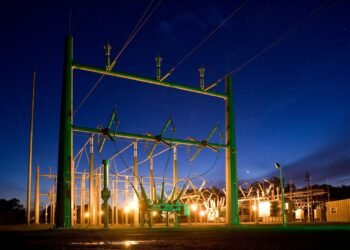

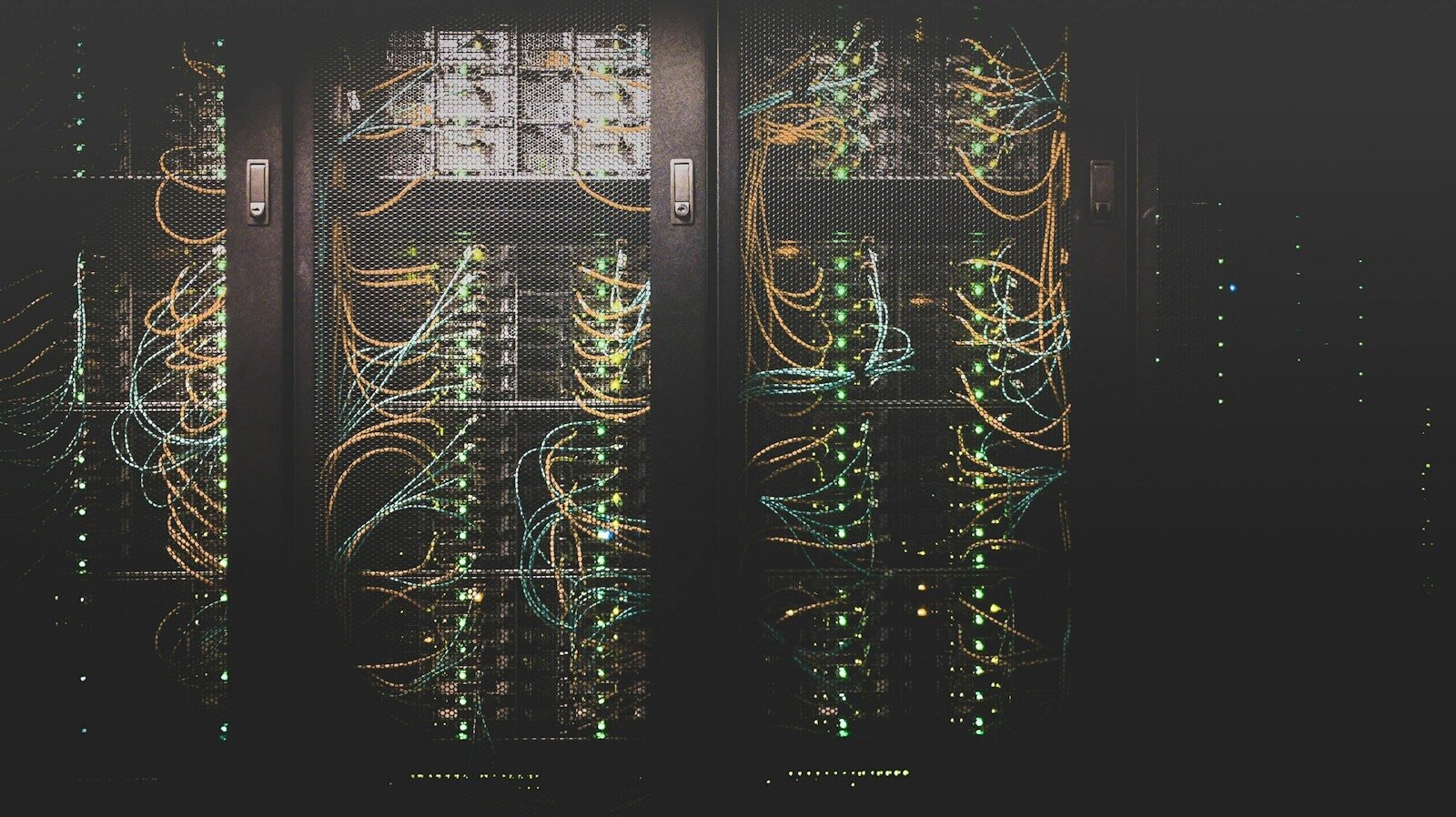
A hyperscale data center is a very large facility built to run cloud and AI workloads for a single operator. The term is commonly used for sites with thousands of racks and tens of megawatts of capacity or more.
What makes it hyperscale
Scale and standardization. Operators build repeatable designs and add capacity quickly. Many sites are planned in phases, so a campus can grow from one building to several.
Why power is the first question
These facilities use a lot of electricity. A report from Lawrence Berkeley National Laboratory estimated that data centers used about 4.4 percent of U.S. electricity in 2023 and could reach roughly 6.7 to 12 percent by 2028. That is why developers look for available grid capacity before they pick land.
Cooling and water
Servers produce heat, and removing it takes energy and sometimes water. Designs range from air cooling to closed loops and liquid cooling. We cover those in our cooling and water coverage.
What to watch
Interconnection timelines, local permits, equipment lead times and community concerns can all shape a project. For more, read our data center construction coverage.
Related reading
Keep going with more explainers in Eco Explained, or see the latest in News.
Get the Eco Business News newsletter. Free.
Plain news on eco, business and data centers. No spam.
Quick recap
- The short version: Listen to this article 1x 1.25x 1.5x (function(){var w=document.currentScript.parentNode;var b=w.querySelector(‘.ebn-lb’),t=w.querySelector(‘.ebn-lt’),s=w.querySelector(‘.ebn-ls’);if(!(‘speechSynthesis’ in window)){w.style.display=’none’;return}var root=w.closest(‘.content-inner’)||document;var q=[],i=0,on=false;function build(){q=[];root.querySelectorAll(‘p,h2’).forEach(function(e){if(e.closest(‘.ebn-listen,.ebn-sub-end’))return;var x=e.textContent.trim();if(x.length>2)q.push(x)});return q}function words(){return build().join(‘ ‘).split(/\s+/).length}t.textContent=Math.max(1,Math.round(words()/160))+’ min listen’;function say(){if(!on||i>=q.length){on=false;b.textContent=’Listen to this article’;b.className=’ebn-lb’;i=0;return}var u=new SpeechSynthesisUtterance(q[i]);u.rate=parseFloat(s.value);u.lang=’en-US’;u.onend=function(){i++;say()};speechSynthesis.speak(u)}b.onclick=function(){if(on){on=false;speechSynthesis.cancel();b.textContent=’Listen to this article’;b.className=’ebn-lb’;return}build();i=0;on=true;b.textContent=’Stop listening’;b.className=’ebn-lb ebn-on’;speechSynthesis.cancel();say()};s.onchange=function(){if(on){speechSynthesis.cancel();say()}};window.addEventListener(‘beforeunload’,function(){speechSynthesis.cancel()})})(); A hyperscale data center is a very large facility built to run cloud and AI workloads for a single operator.
- What makes it hyperscale: Scale and standardization.
- Why power is the first question: These facilities use a lot of electricity.
- Cooling and water: Servers produce heat, and removing it takes energy and sometimes water.
- What to watch: Interconnection timelines, local permits, equipment lead times and community concerns can all shape a project.
- Related reading: Keep going with more explainers in Eco Explained , or see the latest in News .
Questions readers ask
What should I know about the short version?
The term is commonly used for sites with thousands of racks and tens of megawatts of capacity or more.
What should I know about what makes it hyperscale?
Operators build repeatable designs and add capacity quickly. Many sites are planned in phases, so a campus can grow from one building to several.
What should I know about why power is the first question?
A report from Lawrence Berkeley National Laboratory estimated that data centers used about 4.4 percent of U.S. electricity in 2023 and could reach roughly 6.7 to 12 percent by 2028.
What should I know about cooling and water?
Designs range from air cooling to closed loops and liquid cooling. We cover those in our cooling and water coverage.
What should I know about what to watch?
For more, read our data center construction coverage .
What should I know about related reading?
Get the Eco Business News newsletter. Plain news on eco, business and data centers.
Test yourself
- In one sentence, how would you explain the short version to a friend? Compare your answer with the section above.
- In one sentence, how would you explain what makes it hyperscale to a friend? Compare your answer with the section above.
- In one sentence, how would you explain why power is the first question to a friend? Compare your answer with the section above.
- In one sentence, how would you explain cooling and water to a friend? Compare your answer with the section above.
Share this guide
If this guide on hyperscale data center was useful, send it to a colleague, a neighbor or your team. Use the share buttons at the top of the page to post it on LinkedIn, email it, or copy the link.
A short checklist for specifiers
- Name the scope: which systems, sizes and service conditions the section covers.
- State the standards the product must meet and the tests required before shipment.
- List acceptable manufacturers and a basis of design, and say how substitutions are reviewed.
- Require submittals that show performance data, materials, weights and dimensions.
- Define startup, commissioning, training and warranty.
- Record what the owner needs at turnover so operators can keep the system running.
How suppliers and specifiers can work together
Engineers write better sections when they have clean, current information early. Suppliers who share a clear cut sheet, a short basis of design paragraph and honest lead time and stock information make it easier to write hyperscale data center requirements that can actually be bought and installed. The most useful conversations happen while the mechanical specification is still open, before bids go out. Be specific about what is standard, what is custom and what changes the price or the schedule. Specifiers should keep notes on what worked, so the next master spec starts stronger than the last one.
Common mistakes with hyperscale data center
Most problems with hyperscale data center trace back to the same few habits. The requirement is written late, after the equipment has been selected. The section copies an old project without checking it against current codes and owner standards. Coordination with other trades is left to the field. Testing is described in general terms, so nobody is sure who proves what. And the closeout documents are vague, so operators inherit a system they do not fully understand. The fix is not complicated. Start the section early, write requirements that can be measured, assign each test to a named party and ask for a clean, labeled handoff. Doing these four things turns a routine spec section into a reliable result, and it helps every manufacturer and contractor bid the same job.
Commissioning and handoff for hyperscale data center
Commissioning proves that the written requirements were met. For hyperscale data center, ask the commissioning agent to prepare a test plan before construction, review submittals against the spec, witness factory tests where they matter and run functional tests under load. Every failed test should be logged, fixed and retested. At turnover the owner should receive final drawings, settings, test reports, spare parts lists, warranty terms and training records. Schedule a follow up visit after the first season of operation, since many issues only appear once real conditions arrive. A project that ends with documented proof, not a handshake, is far easier to operate and to expand later.