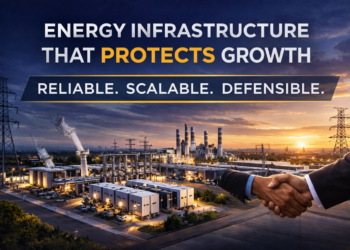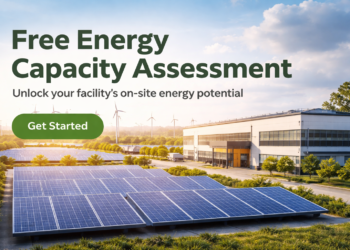







As the world races to decarbonize, the construction and energy sectors are under intense scrutiny for their environmental impact. While giants like Holcim and Heidelberg Materials revolutionize sustainable building materials, Pacifico Energy is carving a distinct path in renewable energy and storage, powering industries and data centers with clean, scalable solutions. This article spotlights Pacifico Energy’s innovative contributions to the energy transition, placing its work in the broader context of sustainability alongside construction leaders. With a focus on solar projects and battery storage, Pacifico Energy is lighting the way for a greener future.
Pacifico Energy: A Renewable Energy Trailblazer
Founded in 2016 by Ulf Oesterlin, a former McKinsey energy sector expert, Pacifico Energy has rapidly grown into a dynamic player in renewable energy. Headquartered in Japan and Munich, with operations spanning the Asia-Pacific, North America, and Europe, the company specializes in utility-scale solar, wind, and battery storage projects. Its mission is clear: to accelerate the global shift to clean energy by delivering customized, sustainable power solutions for commercial and industrial clients.
In 2024, Pacifico Energy achieved a milestone by reaching commercial operation on five major projects, including solar and storage installations in the U.S. and Japan, setting the stage for further expansion in 2025. Its flagship Miyako Solar Park in Japan, a 111 MW solar facility, powers thousands of homes and businesses, showcasing its ability to deliver large-scale renewable energy. Unlike traditional utilities, Pacifico Energy emphasizes flexibility, offering long-term power supply contracts that minimize capital costs for clients while integrating technologies like photovoltaics, batteries, and even emerging options like fuel cells.
Pacifico Energy’s U.S. operations are particularly noteworthy. With a focus on commercial and industrial (C&I) clients, the company designs bespoke energy systems for data centers, manufacturing facilities, and logistics hubs. In 2024, it closed deals to power data centers in California and Texas, capitalizing on the AI-driven boom in computing infrastructure. These projects combine solar arrays with advanced battery storage to ensure reliable, round-the-clock clean energy, addressing the intermittency challenges of renewables. Pacifico’s ability to raise equity and debt funding, partnered with global financial institutions, has fueled its growth, enabling it to tackle projects ranging from 10 MW to over 100 MW.
The Data Center Connection: Powering the Digital Age
The global data center market is exploding, with Statista projecting a market size of $552 billion by 2028, driven by AI, cloud computing, and 5G. Data centers are notoriously energy-hungry, consuming up to 3% of global electricity. Pacifico Energy is seizing this opportunity, positioning itself as a go-to provider of renewable power for these facilities. Its solar + storage solutions offer a compelling alternative to fossil fuel-based grids, reducing Scope 2 emissions for tech giants and hyperscalers.
For example, Pacifico’s recent Texas project integrates a 50 MW solar farm with lithium-ion battery storage, delivering consistent power to a data center operated by a major cloud provider. The project’s design allows for rapid deployment—Pacifico can energize sites in as little as two years—making it a nimble partner in fast-moving industries. By retrofitting existing sites with cogeneration or developing greenfield projects, Pacifico ensures cost-effective, sustainable energy without compromising reliability. This focus on C&I applications sets it apart from competitors, who often prioritize utility-scale grid connections.
Battery Storage: The Unsung Hero
Battery storage is the linchpin of Pacifico Energy’s strategy. As renewable energy adoption grows, storage systems are critical for managing supply and demand fluctuations. Pacifico’s expertise in lithium-ion batteries, coupled with its exploration of next-generation technologies like solid-state batteries, positions it at the forefront of this field. In 2024, the company deployed over 200 MWh of storage capacity across its portfolio, a 30% increase from 2023, enabling clients to store excess solar energy for use during peak demand or nighttime hours.
While Pacifico Energy operates independently, its storage solutions could theoretically complement the energy-intensive operations of construction leaders like Holcim and Heidelberg Materials. For instance, cement plants, which consume vast amounts of electricity, benefit from stable, renewable power sources. However, Pacifico has no direct partnerships with these companies, focusing instead on sectors like data centers and manufacturing. Its agnostic approach to technology—evaluating photovoltaics, wind, batteries, and more—ensures tailored solutions that maximize efficiency and sustainability.
Holcim and Heidelberg Materials: A Parallel Pursuit of Sustainability
To appreciate Pacifico Energy’s role, it’s worth comparing its efforts to those of Holcim and Heidelberg Materials, leaders in sustainable construction. Holcim, with 2024 net sales of CHF 26.4 billion, is the world’s largest cement producer, known for low-carbon products like ECOPact concrete and ECOPlanet cement. Its ECOCycle® platform recycled 10 million tons of construction waste in 2024, and its U.S. operations, including a solar array at its Alpena, Michigan, plant, aim for 80% renewable energy by 2030.
Heidelberg Materials, meanwhile, pursues decarbonization through innovations like hydrogen co-firing and biomass fuels. Its 2024 acquisition of Giant Cement Holding Inc. for $600 million strengthened its U.S. presence, and its partnership with Sympower optimizes energy use in Greece. Both companies are reducing Scope 1 and 2 emissions, with Holcim targeting a 10% CO2 reduction per net sales in 2025 and Heidelberg aiming for net-zero by 2050, validated by the Science Based Targets initiative (SBTi).
While Holcim and Heidelberg Materials focus on materials, Pacifico Energy addresses the energy side of sustainability. There are no known collaborations between Pacifico and these firms, but their goals align in the broader mission to decarbonize. For example, Pacifico’s solar + storage systems could power the kind of data centers that use Holcim’s green concrete, creating an indirect synergy in sustainable infrastructure.
Pacifico Energy’s Unique Edge
What sets Pacifico Energy apart is its entrepreneurial agility. With a team of over 50 professionals across four continents, it combines deep energy expertise with a flat, collaborative structure, allowing rapid responses to market opportunities. Its strategic pivot in 2019, when it listed its operating plants as Tion Renewables AG and refocused on new project development, built a 4,000 MW pipeline of solar and wind projects. This pipeline, spanning Europe and North America, underscores Pacifico’s ambition to scale clean energy globally.
Pacifico also prioritizes community impact. Its projects engage local stakeholders, from landowners to contractors, fostering economic development while reducing carbon footprints. In Japan, the Miyako Solar Park supports regional decarbonization goals, aligning with COP26/27 objectives. In the U.S., Pacifico’s partnerships with landowners and industry contractors create jobs and infrastructure, amplifying its impact.
Challenges and Opportunities
Pacifico Energy faces challenges common to the renewable sector. Battery storage economics remain a hurdle, with lithium-ion costs needing to compete against cheaper fossil fuels. Regulatory complexities, such as permitting for large-scale solar farms, can delay projects. Additionally, the data center market’s rapid growth demands constant innovation to meet escalating power needs. Yet, Pacifico’s ability to secure funding and its technology-agnostic approach give it a competitive edge.
Looking ahead, Pacifico Energy is well-positioned to capitalize on global renewable energy trends. The International Energy Agency (IEA) forecasts that renewables will account for 50% of global electricity by 2030, with solar leading the charge. Pacifico’s focus on C&I applications, particularly data centers, aligns with this trajectory. Its exploration of emerging technologies, such as green hydrogen or solid-state batteries, could further differentiate it in a crowded market.
A Bright Future for Pacifico Energy
Pacifico Energy is a beacon of innovation in the renewable energy landscape, delivering clean power to industries shaping the digital and industrial future. While it operates independently of construction giants like Holcim and Heidelberg Materials, its work complements their efforts to build a sustainable world. By powering data centers, manufacturing plants, and communities with solar and storage, Pacifico is proving that clean energy is not just a goal but a reality.
As the world builds smarter cities and greener infrastructure, Pacifico Energy’s role will only grow. Picture a data center humming with AI computations, powered by a Pacifico solar farm, or a factory running on stored renewable energy—these are the scenes Pacifico is bringing to life. With its bold vision and proven track record, Pacifico Energy is not just shining a light on sustainability; it’s illuminating the path forward.
Disclaimer: This article is for informational purposes only and does not constitute investment advice. EcoBusinessNews.com encourages readers to conduct their own research before making financial decisions.