





There’s a fundamental shift happening across industries that most leaders are still treating as someone else’s problem — until the power bill arrives, the grid connection gets delayed two years, or a new facility sits half-built waiting on a utility that simply can’t move fast enough.
Energy is no longer a utility. It’s a strategic asset. And the organizations that get ahead of this will have a structural advantage over those that don’t.
This Isn’t Just a Tech Story Anymore
Yes, you’ve heard about Big Tech’s power appetite. Google’s parent Alphabet just acquired energy developer Intersect Power for $4.75 billion. Microsoft is spending over $1.5 billion to restart the Three Mile Island nuclear plant. Oracle is building behind-the-meter natural gas generation directly on-site at its AI campuses, bypassing the grid entirely.
But let’s be clear: the power crisis hitting data centers is the same crisis hitting manufacturers, hospitals, defense contractors, logistics hubs, semiconductor fabs, industrial campuses, and any organization running mission-critical operations.
The sectors feeling this pressure most acutely right now:
- Industrial & Manufacturing — Electrification mandates, EV production lines, and reshoring of domestic manufacturing are driving power demands that many utilities can’t meet on the timelines factories need
- Mission-Critical Facilities — Hospitals, emergency operations centers, defense installations, and financial infrastructure cannot afford grid instability — they need firm, reliable, on-site power
- Data Centers & Colocation — AI workloads have exploded power density per rack from ~12 kW to over 100 kW; a single AI training cluster can draw 100 MW or more
- Life Sciences & Semiconductors — Chip fabs and pharmaceutical manufacturing require uninterrupted, precision-grade power — the kind utilities rarely guarantee
- Logistics & Cold Chain — Large-scale distribution centers and refrigerated facilities are seeing energy costs up 42% since 2019, with no relief in sight from the grid
The common thread? The grid wasn’t designed for what these industries need today.
The Scale of the Problem
U.S. electricity rates rose more than 5% year-over-year through early 2026. Utilities requested $31 billion in rate hikes during 2025 alone. Data center power consumption in the U.S. alone is projected to grow by 160% by 2030 — and that’s before accounting for industrial electrification and onshoring.
“Utilities just don’t necessarily have either the grid capacity or the generating capacity to be able to build it fast enough,” Wood Mackenzie analyst Ben Hertz-Shargel noted recently.
Interconnection queues are backed up for years. Transmission upgrades take decades. And many states are now adding new regulatory restrictions on large loads connecting to the grid at all.
Waiting for the grid is no longer a viable strategy for any large power user.
Not Everyone Can Do What Google Did
Acquiring a $4.75 billion energy developer isn’t a playbook most organizations can replicate. And they shouldn’t have to.
The smarter path — one that’s gaining serious traction across industrial, mission-critical, and tech sectors — is partnering with an Independent Power Producer (IPP) to bring dedicated generation directly to your operations.
Here’s the model:
An IPP designs, finances, builds, and operates power infrastructure within your walls — behind your meter — so you don’t have to.
- ✅ They fund it — no capital expenditure on your balance sheet
- ✅ They build it — no need to become an energy developer overnight
- ✅ They operate and maintain it — long-term performance is their responsibility
- ✅ You get firm, fast, reliable power — often operational in 12–24 months vs. years of grid waiting
- ✅ You control your energy costs — locked-in, predictable pricing regardless of what utilities do
This is not a workaround. It’s the model that forward-thinking organizations across industries are quietly adopting right now.
What Good Looks Like
The best IPP partners aren’t just selling kilowatt-hours. They’re full-cycle infrastructure partners — handling site origination, engineering, permitting, financing, construction, and decades of operations. They take on the development risk so you can stay focused on your core business.
Pacifico Energy is one example of this model done right. They design, finance, build, and operate dedicated power solutions for complex, large-load projects — from hyperscale data center campuses to industrial and mission-critical facilities — with the ability to move quickly under tight timelines and technical constraints. Their GW Ranch project in West Texas is a 5+ GW private-grid campus delivering first power in Q1 2027, completely off-grid and independent of the Texas utility system.
That’s what energy independence looks like at scale.
Where to Start
If you’re running a large, energy-intensive operation and still treating power as a passive line item, the first step is understanding where you actually stand — and where your exposure is.
A proper energy assessment should answer: What is your current and projected load? Where are your reliability risks? What would grid disruption or a rate shock actually cost your operations? And is there a better path than waiting on your utility?
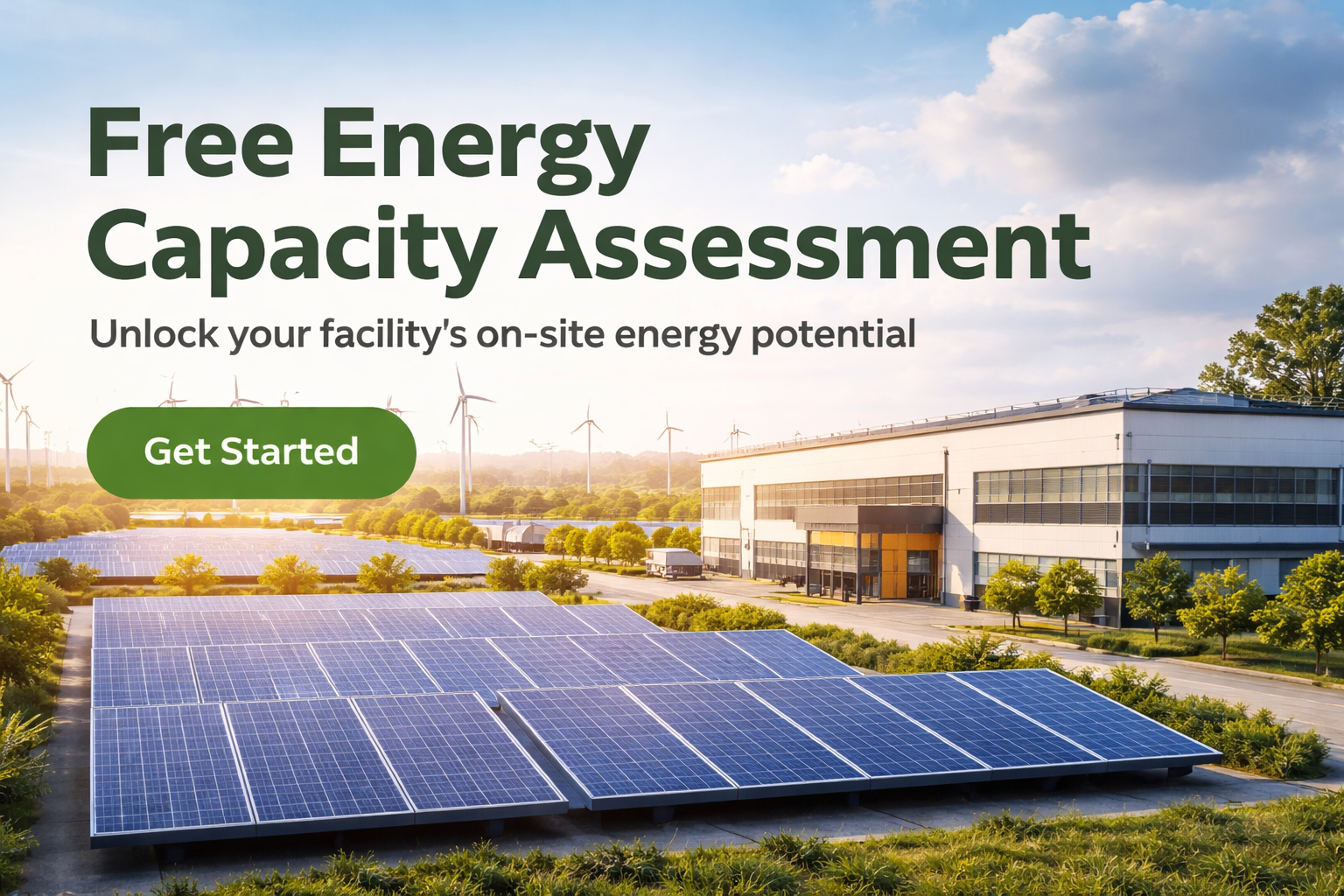
EcoBusinessNews.com/assessment is one resource worth starting with — a straightforward way to frame your energy position before committing to any strategy.
The Bottom Line
Energy is no longer a passive infrastructure cost. For manufacturers, mission-critical operators, data center developers, and industrial companies alike, it is now a competitive differentiator.
The hyperscalers figured this out first. But the behind-the-meter IPP model exists precisely for the rest of the market — organizations that need reliable, fast, cost-certain power without betting billions on becoming energy developers themselves.
The organizations moving now will have locked in firm power, predictable costs, and operational resilience before their competitors even start the grid interconnection queue.
The question isn’t whether to act. It’s how fast.
Is your organization starting to treat energy as a strategic asset? I’d be very interested in what you’re seeing across your sector — drop a comment or reach out directly.
#EnergyIndependence #MissionCritical #Industrial #DataCenters #Manufacturing #BehindTheMeter #IPP #EnergyStrategy #Infrastructure #AI #LifeSciences #Semiconductors #PacificoEnergy