

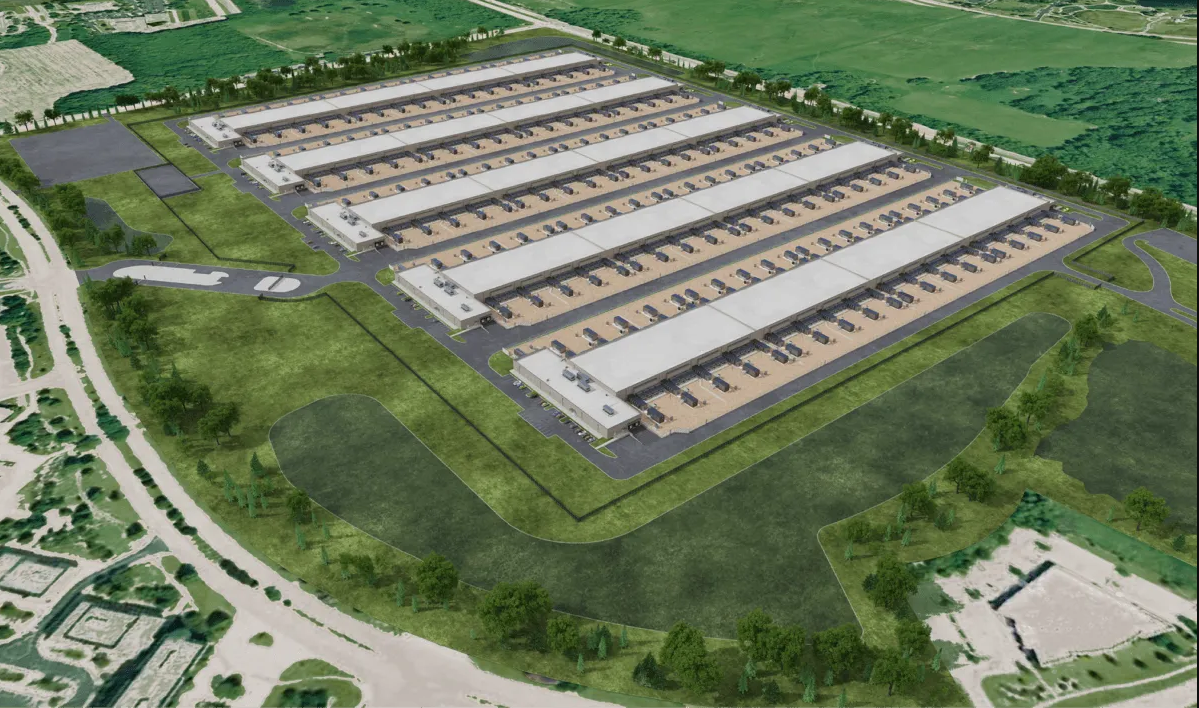







– Solar and Storage Dominate the Grid
In the high-stakes arena of global business, few sectors promise the explosive growth and transformative potential of America’s energy infrastructure in 2025. As corporate boards scramble to meet ESG mandates and investors hunt for the next unicorn, the U.S. is witnessing a seismic shift: a clean energy boom propelled by renewables, battery storage, and grid modernization. With projections estimating $1.4 trillion in opportunities from 2025 to 2030, including $65 billion earmarked from the Infrastructure Investment and Jobs Act (IIJA) for power upgrades, this isn’t just infrastructure—it’s a gold rush for savvy enterprises. Solar and battery storage are leading the charge, poised to add a record 18.2 GW of utility-scale battery capacity this year alone, while the overall renewable market barrels toward 1,002 GW by 2033.
At EcoBusinessNews.com, we track the intersections of ecology, economy, and enterprise. This deep-dive explores the pipelines, players, and prospects defining U.S. energy infrastructure today. From Texas battery behemoths to California solar hybrids, discover how businesses are capitalizing on this green wave—and what it means for your bottom line.
Record-Breaking Renewables: Solar and Storage Dominate the Grid
America’s energy grid, long criticized for its fossil-fuel dependency, is undergoing a renaissance. In 2024, the U.S. nearly doubled its battery storage capacity to 29.8 GW, with solar installations surging ahead as the top source of new capacity. Heading into 2025, the momentum accelerates: Expect 15.2 GW of new storage installations, building on last year’s 12.3 GW record. This isn’t hype—it’s hardware hitting the ground, stabilizing intermittency in wind and solar while enabling electric vehicle fleets and data centers to thrive without blackouts.
Battery Energy Storage Systems (BESS) are the unsung heroes, capturing excess renewable power for peak-demand dispatch. Costs have plummeted, with utility-scale projections showing further declines through 2030. Hybrids—pairing solar or wind with storage—are the sweet spot for investors, offering reliable revenue streams via capacity markets and ancillary services. In Texas and California, where renewables now outpace coal, these setups are slashing wholesale prices and attracting billions in private capital.
The business case? Resilient supply chains. As of Q1 2025, 123 battery manufacturing projects are operational nationwide, spurred by the Inflation Reduction Act’s incentives. This domestic push reduces reliance on imports, bolsters national security, and creates ripple effects: From lithium mining in Nevada to assembly lines in Georgia, jobs and GDP growth follow.
Pipeline Powerhouses: Key Projects Reshaping the Landscape
Diving into the construction docket reveals a frenzy of activity. Dodge Project Analytics tracks 188 projects valued at $124 billion, spanning BESS, solar farms, and hybrid plants across 17 states. These aren’t speculative; many are in advanced planning or bidding, signaling imminent shovels in the dirt.
Standouts include:
- Brazos River BESS (180 MW) in West Columbia, Texas ($90 million): In schematics, this Brazoria County facility seeks approvals for grid integration, exemplifying ERCOT’s storage pivot amid record demand.
- Bell Creek BESS (200 MW) nearby ($100 million): Another Texas titan, targeting evening peak support for 150,000 homes—prime for corporate PPAs (power purchase agreements).
- Rowdy Creek Solar and BESS (700 MW) in Sumner, Texas ($50-75 million): Pre-design for May 2027 completion, this Lamar County hybrid could power half a million residences, blending agrivoltaics with energy yields.
- Pelicans Jaw Hybrid Solar (500 MW + 500 MW BESS) in Lost Hills, California ($50-75 million): Kern County’s permit navigator eyes 2026 starts, optimizing water use in drought-prone farmlands—a model for agribusiness integration.
- Hop Hill Renewable Power (500 MW Solar + 500 MW Storage) near Prosser, Washington ($50-75 million): Benton County’s permitting play, exporting stored power to tech-heavy Seattle, with timelines extending to late 2026.
Further afield, Missouri’s Big Hollow Natural Gas Center (800 MW + 400 MW BESS) ($50-75 million) bridges legacy fuels with clean tech for 2028 service, while Louisiana’s Entergy Bayou Power Station (112 MW barge) ($400 million) innovates floating resilience against hurricanes. In the Northeast, New York’s NY2 BESS (151.5 MW) ($50-75 million) fortifies urban grids, and Maine’s Form Energy facility (85 MW) repurposes industrial sites for iron-air batteries.
These projects underscore regional dynamism: Texas leads in sheer scale, California in policy-driven hybrids, and the Midwest in manufacturing tie-ins. For businesses, they’re portals to localized supply chains and tax credits.
The Investment Tsunami: Trillions Flowing into Clean Infrastructure
Wall Street’s verdict? Thumbs up—and checkbooks open. The IIJA’s $21.5 billion grid infusion is just the starter; private equity is pouring in, with $6 billion across 58 renewable deals announced in the first nine months of 2025. Venture funding for energy startups hit new highs, targeting grid optimization and carbon capture alongside core renewables.
Top investors include NextEra Energy (41,916 MW capacity, $165B market cap), Brookfield Renewable Partners, and BlackRock, who see renewables as inflation hedges with 8-12% IRRs. Goldman Sachs and GE back utility-scale plays, while Aquila Capital eyes storage niches. The result: A virtuous cycle where falling battery costs (down 89% since 2010) meet rising corporate demand—think Amazon and Google snapping up 20-year PPAs.
Yet, it’s not all smooth electrons. Supply chain bottlenecks and permitting delays (e.g., Hop Hill’s extension to 2026) pose risks. Savvy firms mitigate via diversified portfolios, blending BESS with emerging tech like geothermal from Fervo Energy and Ormat, TIME’s top GreenTech picks.
Entrepreneurs at the Helm: Innovators Driving the Charge
Behind the megawatts are bold founders turning R&D into revenue. NextEra Energy Resources, helmed by CEO John Ketchum, dominates with wind and solar fleets, but startups steal the spotlight for agility.
- Antora Energy: Co-founders Andrew Ponec and Justin Briggs raised $150M for thermal batteries storing heat for industrial decarbonization—Fast Company’s 2025 most innovative in energy.
- Infinitum: CEO Ben Schuler’s motor tech slashes energy use in EVs and factories, securing $80M to scale amid infrastructure retrofits.
- Budderfly: Oksanen Fellows’ no-capex efficiency platform has retrofitted 1,000+ sites, proving microgrids’ ROI for SMEs.
From Invenergy (28,384 MW, private powerhouse led by Michael Polsky) to EDF Renewables, these developers command billions. Emerging stars like Fervo Energy (geothermal disruptor) and StartUs Insights’ top 10—including grid AI firms—signal a startup ecosystem maturing fast. Funded ventures in battery and solar optimization raised over $2B in 2025, per Fundraise Insider.
Voices of Vision: Thought Leaders Shaping Policy and Practice
No revolution succeeds without navigators. Fatih Birol of the IEA warns of storage shortfalls but hails U.S. progress, urging tripling capacity by 2030. Dr. Ursula von der Leyen, influencing transatlantic ties, champions equitable transitions.
Stateside, Brittany Kelm, White House Senior Policy Advisor on the National Energy Dominance Council, bridges policy and private sector at NCEW 2025. Deloitte’s Thomas L. Keefe forecasts VPPs (virtual power plants) as the 2026 game-changer, aggregating home batteries for grid relief. In New York, Elijah Hutchinson drives city-scale clean programs, per City & State.
At ACORE’s FINANCE, voices like those from the Business Council for Sustainable Energy amplify: Clean hydrogen lags, but solar-storage hybrids soar. These leaders, from CSE’s market transformers to Irving Institute strategists, stress collaboration—policy incentives meeting corporate innovation.
Horizons Ahead: Opportunities Amid Headwinds
As 2025 unfolds, America’s energy infrastructure stands at an inflection: Ember’s report notes a pivot from gas, with storage hitting 10 GW last year. Challenges—interconnection queues, raw material volatility—persist, but tailwinds like IRA tax credits and state mandates (e.g., California’s 100% clean by 2045) overpower them.
For businesses, the playbook is clear: Invest in hybrids for stability, partner with developers like NextEra for scale, and heed leaders like Birol for foresight. This $1.4T wave isn’t a bubble—it’s the bedrock of a $100T global transition.
At EcoBusinessNews, we’re bullish. What’s your move in this electrified economy? Share in the comments—let’s connect the dots.
Sources: EIA, NREL, REGlobal, Business Wire, and more. For full disclosures, see citations. www.positivephil.com