
This article covers water positive goals in plain language, with clear examples and practical points.
Almost every large company now has a water goal. Some say they will reduce their water use. Others promise to replenish more water than they use. A few, including some tech firms, have set targets to restore more water than their data centers consume. Those are big promises, and they are easy to repeat and hard to check. Here is how to read them.
Three different kinds of water goal
A reduction goal cuts water use compared with a baseline, such as cutting withdrawals by a set percentage by a certain year. An efficiency goal lowers water used per unit of output, such as liters per unit of computing work. A replenishment or water-positive goal says the company will return more water to the environment than it uses, usually by funding projects that restore watersheds or improve supply.
Each type answers a different question. Reduction shows whether the company is using less. Efficiency shows how well it uses what it needs. Replenishment shows what it is doing outside its own fence. A company can meet one and miss the others.
What “water positive” should mean
A credible water-positive claim names the baseline, the period, the volume and the method. It should say whether the water restored is measured or estimated, and where it is located. It should also make clear whether the restored water is added to the same watershed where the company operates. A project in a distant region may be good work, but it does not offset local stress in the same way.
Check whether the claim counts water used for power generation. A data center may use little water on site and still depend on a grid powered by thermal plants that use large volumes. Honest reporting names that boundary.
Where the water comes from
Water sources matter as much as volume. Potable municipal water, groundwater, surface water and reclaimed water each carry different costs and risks. A site that draws from a stressed aquifer faces a different problem from one that uses treated wastewater. Good reporting breaks out the source and explains how the company decides where to build.
Restoration projects that hold up
Water restoration projects range from wetland work and watershed repair to leak reduction in municipal pipes and irrigation upgrades for farms. The strongest projects have clear targets, independent monitoring and a plan for maintenance after the first year. They also say what happens if the project underperforms.
Look for third-party verification. An outside auditor who reviews the methods gives readers more confidence than a company summary alone.
Questions to ask about any water claim
Before repeating a water claim, a reporter, buyer or community member can ask a few plain questions. What is the baseline year and why was it chosen? What volume is counted, and does it include the whole value chain? Where is the restored water, and is it in the same basin? How is it measured? Who checks the numbers? And what happens if the project falls short?
What engineers and facility teams can contribute
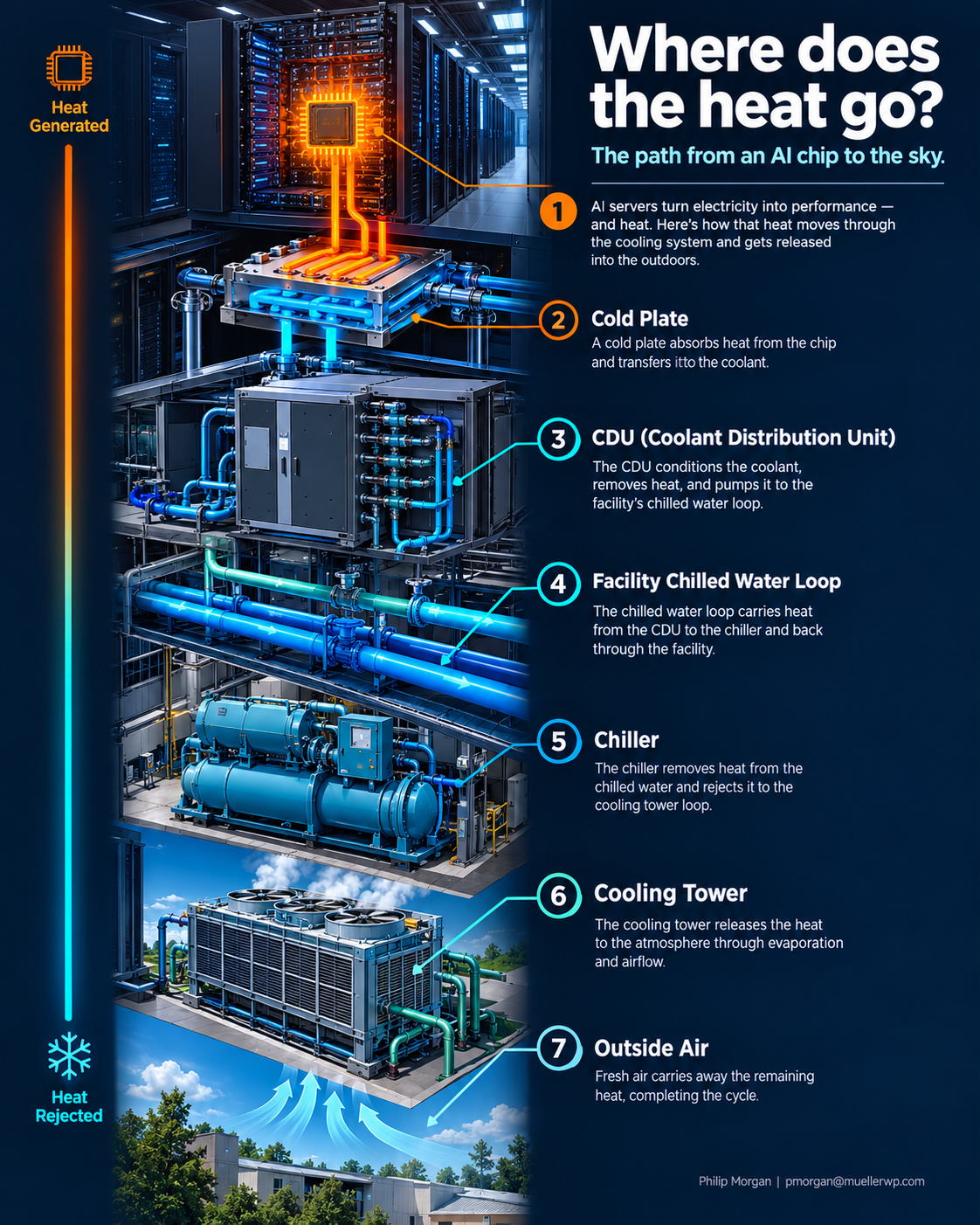
Water goals are won or lost in design and operations. Engineers can plan closed loops where they make sense, specify efficient cooling, meter each loop, and choose valves and controls that avoid leaks. Facility teams can tune water treatment, catch leaks early and track blowdown. Those steps turn a goal into something the building does every day.
They also make reporting easier. A site with good meters and clean records can answer a hard question quickly. A site without them has to estimate, and estimates draw scrutiny.
Why this is a business issue
Water access is a risk for any company that builds or runs a large facility. Permits can be delayed, communities can push back and local utilities can set limits during drought. Firms that plan for water early, and report it clearly, are more likely to keep their projects moving. That is good for shareholders and for the people who live near the site.
Where honest reporting helps the most
Readers do not need perfect data. They need clear data with the method stated. A short note on the baseline, the boundary and the verification does more for trust than a bold headline. When companies publish that detail, reporters and analysts can compare them fairly, and the public can decide what the numbers mean.
The bottom line
A water-positive goal can be a real commitment, and some companies are doing serious work behind their targets. The right response is neither cynicism nor applause. It is to ask for the baseline, the method, the location and the verification, and to read the answers closely. Good water stewardship stands up to those questions.
Water positive goals in practice
When you look at water positive goals, start with the basics and then check how they apply to your own situation. A clear view of water positive goals helps you ask better questions and avoid costly mistakes.
In short, water positive goals is easier to judge when you use plain numbers, trusted sources, and a simple checklist.
Related reading
Reclaimed water data center cooling: what Google does in Georgia | Xylem Water Access: 20 Million People Reached Since 2019, Company Says | Meta Water Positive Goal: Restoring More Water Than Its Data Centers Use
For more background, see the U.S. Department of Energy.