
This article covers data center water use in plain language, with clear examples and practical points.
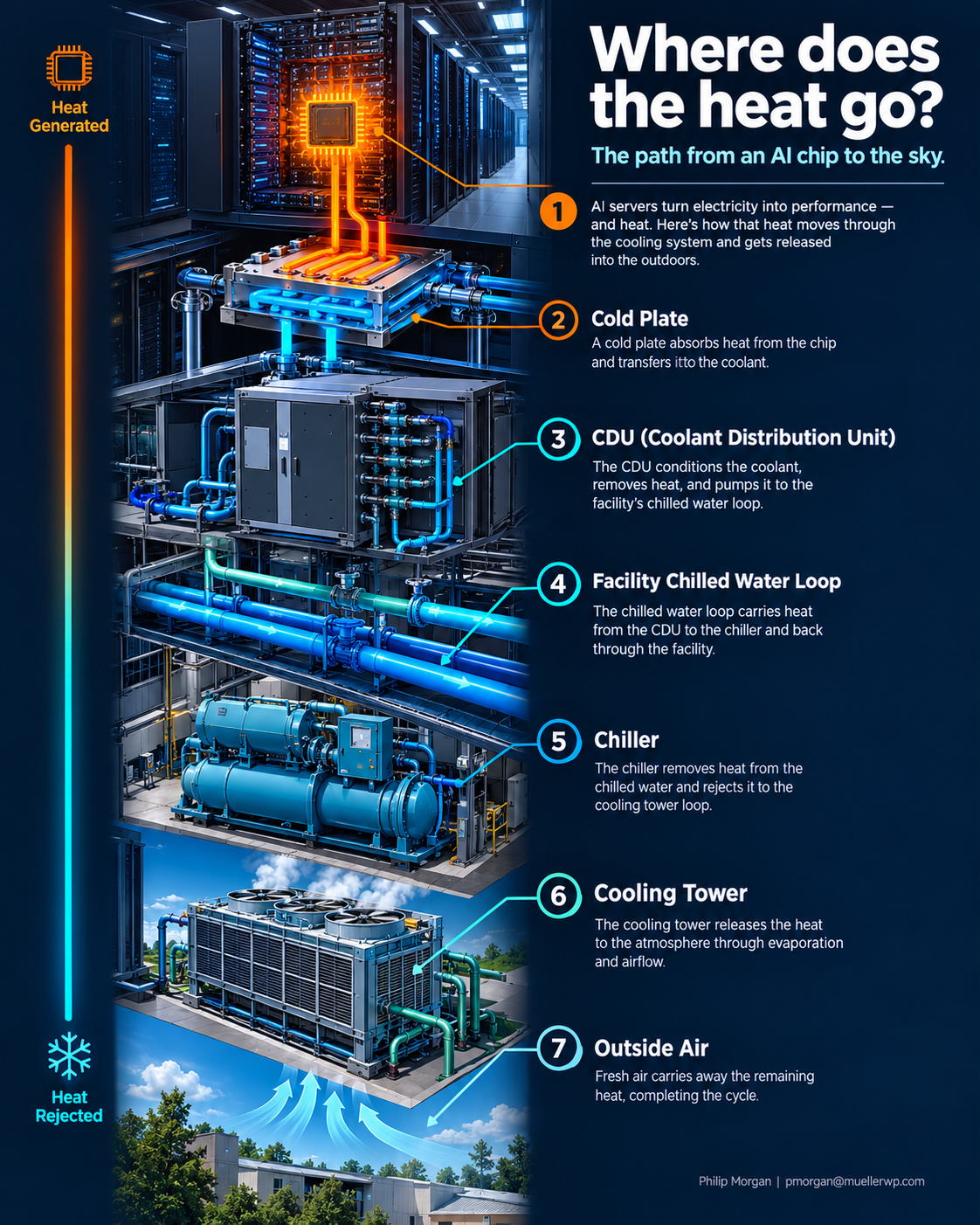
Every data center uses electricity, and nearly all of it turns into heat. That heat has to leave the building, or the servers fail. For decades the easiest way to remove it has been evaporation, which means water. Understanding where that water goes is the first step to judging any claim about data centers and water.
Two kinds of water use
Water use at a data center falls into two groups. The first is the water that evaporates in cooling towers, which is consumed and does not come back. The second is the water used to make electricity at the power plant that supplies the site. Most public discussion focuses on the first group, and that is where a facility manager has the most control.
Engineers measure the first group with a metric called water usage effectiveness, or WUE. It is the liters of water used per kilowatt-hour of IT energy. A lower number means less water per unit of computing work. WUE sits next to power usage effectiveness, or PUE, which tracks how much extra energy goes to cooling, lighting and power distribution compared with the computers themselves.
How cooling towers use water
A typical evaporative system pumps warm water from the chillers or the process loop up to the top of a cooling tower. The water runs down through fill material while air moves across it. A small part evaporates and carries heat away. The rest drops back into a basin and cycles again.
Evaporation is only part of the story. Water in the tower also concentrates dissolved minerals as it evaporates. To keep scale and corrosion under control, operators bleed off some of that water and replace it with fresh water. This blowdown is a second, quieter source of use. A facility that runs its towers at higher cycles of concentration uses less fresh water for the same cooling, but it has to manage the chemistry carefully.
Why the site and the climate matter
The same building can use very different amounts of water depending on where it sits. Hot, dry air pulls more water out of a tower. Humid air holds less additional moisture, so evaporation slows. Engineers also choose cooling designs based on the local climate. Air-cooled chillers, dry coolers and closed loop systems can cut water use sharply, but they often use more electricity, and the trade-off is real.
That is why a single number from one site rarely tells the full story. A fair comparison looks at the cooling design, the climate, the water source and whether the water is potable or reclaimed.
Reclaimed water and the local supply
Some operators now use reclaimed municipal wastewater in their cooling towers. This keeps potable water in the system for homes and hospitals. It also has its own costs. Reclaimed water often needs more treatment before it can run through a tower, and the pipes, pumps and valves that carry it must handle the extra chemistry.
Valves matter here more than most people expect. Seats, stems and linings that work well on clean water can wear faster on treated or mineral-heavy water. Choosing the right material for the water source is part of responsible water design.
What a good water report should include
If a company says its data centers are water efficient, ask for specifics. A useful report states the WUE and the method used to calculate it, the climate and cooling type, the water source, and whether the number covers the whole year or a peak period. It should also say whether the figure includes water used for power generation. Reports that leave these details out are harder to check.
Look for the boundary too. A site that buys renewable energy certificates may still draw water-intensive power from a grid that depends on thermal plants. Honest reporting names that boundary instead of hiding it.
What operators can do now
There are practical steps that reduce water use without waiting for new technology. Raising the supply water temperature where equipment allows it lets towers reject heat with less evaporation. Tuning cycles of concentration with better water treatment saves fresh water. Metering each loop separately shows where the water actually goes. And early design choices, such as a closed loop for part of the load, can shape decades of water use.
The bottom line
Data center water use is not a mystery, and it is not always the crisis some headlines suggest. It is a set of engineering choices tied to climate, design and water source. Facilities that measure WUE, report clearly and maintain their equipment can keep their water footprint small while the computing demand grows. The people who specify pumps, valves and controls every day have a real hand in that outcome.
Data center water use in practice
When you look at data center water use, start with the basics and then check how they apply to your own situation. A clear view of data center water use helps you ask better questions and avoid costly mistakes.
In short, data center water use is easier to judge when you use plain numbers, trusted sources, and a simple checklist.
Related reading
Where the Heat Goes in an AI Data Center | Microsoft and Digital Realty Test Two Ways to Cut Data Center Water | Google Sets a Water Standard: Return More Than Data Centers Use by 2030
For more background, see the U.S. Department of Energy.